



You Can Let Go Without Letting Go.
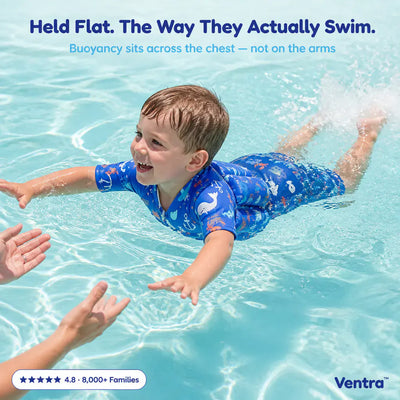
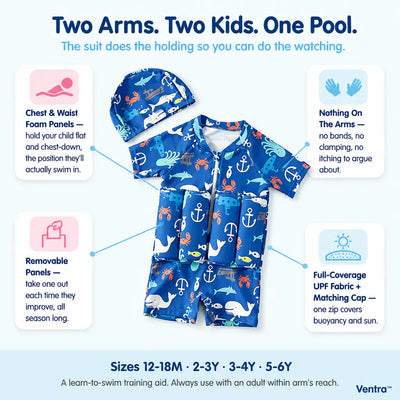
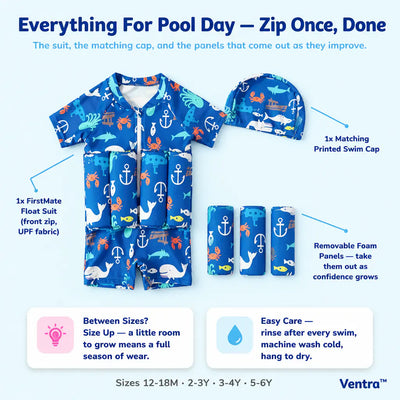
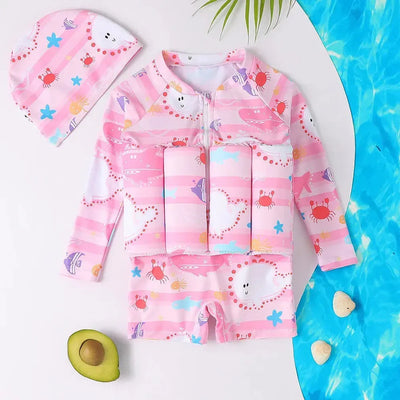
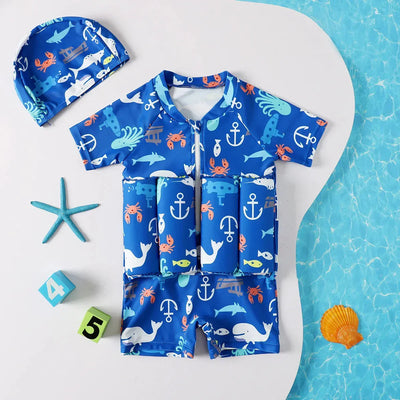
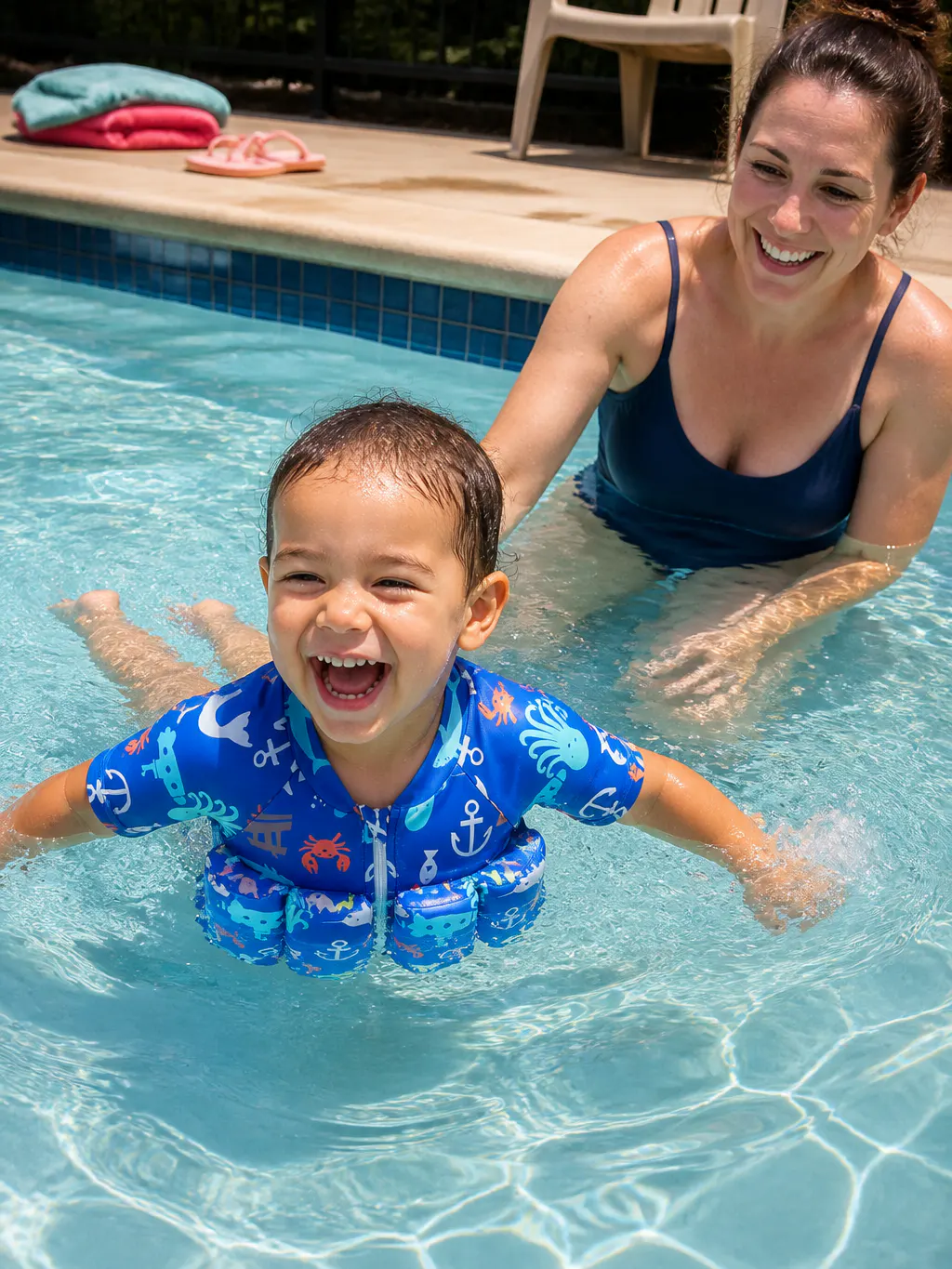
Foam panels sit across the chest and torso - not on the arms - so they float flat with arms and legs completely free to paddle. The panels come out one at a time as they improve, so one suit carries the whole learning curve.
Built As Training Apparel
This is a learn-to-swim training aid designed to be used with an adult within arm's reach. It is not a life jacket, and it never replaces supervision.
Upright Is The Drowning Position. This Holds Them Flat.
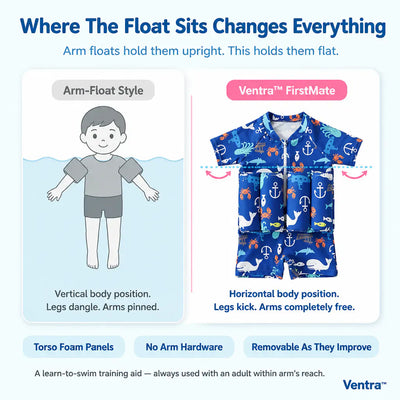
Buoyancy on the arms and buoyancy across the torso do two completely different things to a child's body in the water.
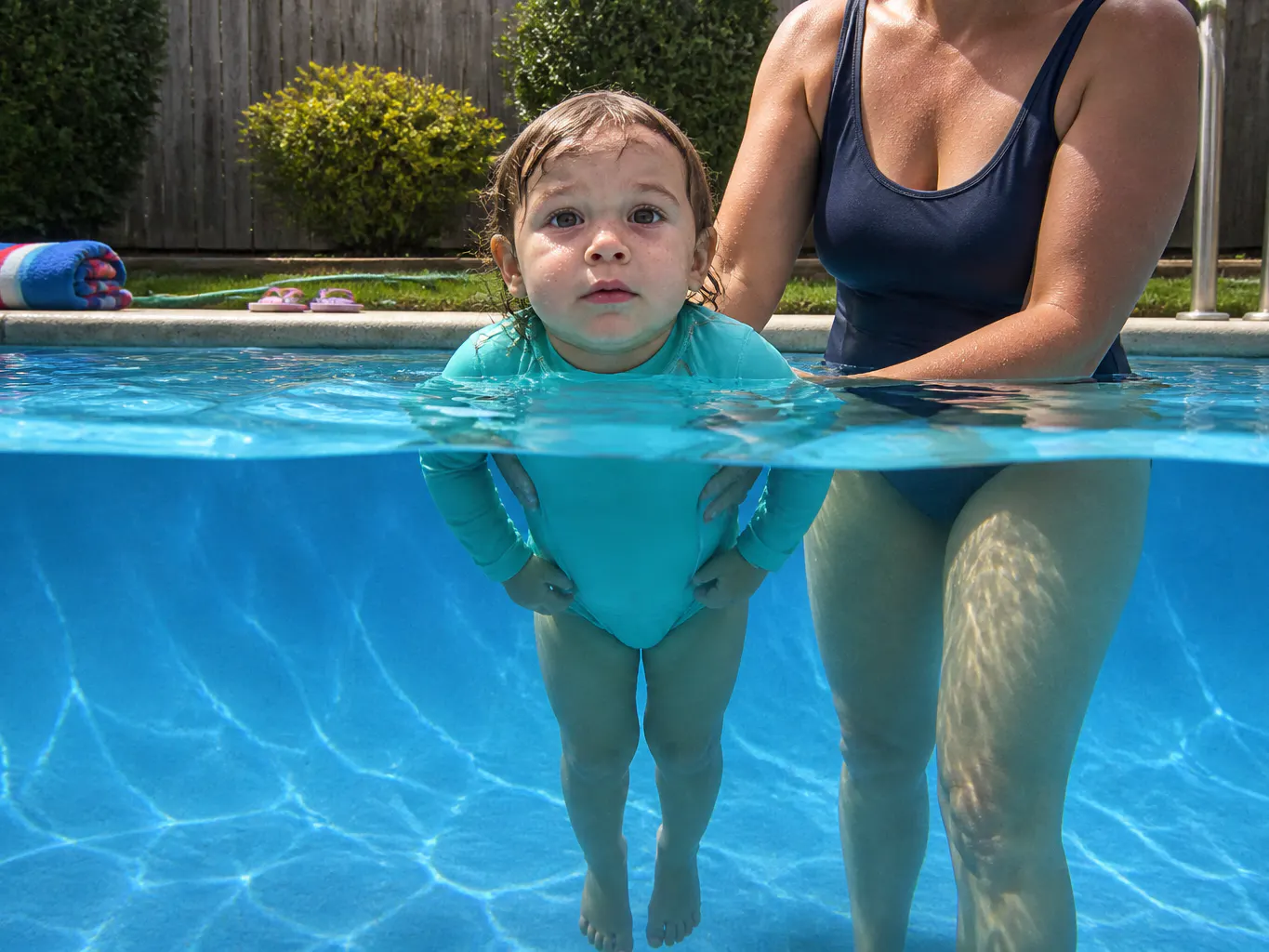
Held upright, legs dangling
When the buoyancy wraps the upper arms, the child's head stays up but the body hangs vertically with the legs beneath. Swim schools publish that this upright orientation does not teach a child to lie horizontal in the water - and the arms are clamped, so paddling is off the table anyway.
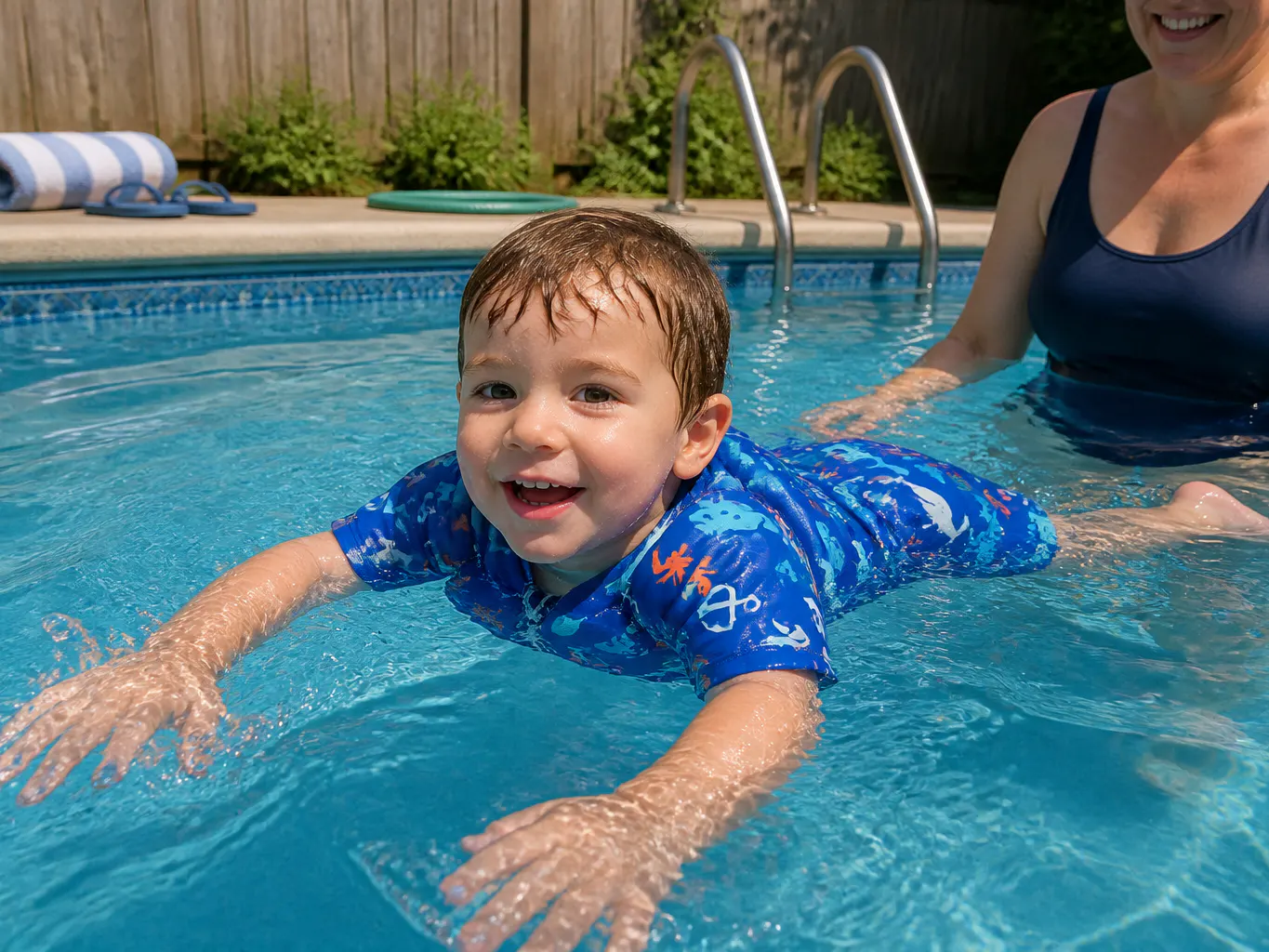
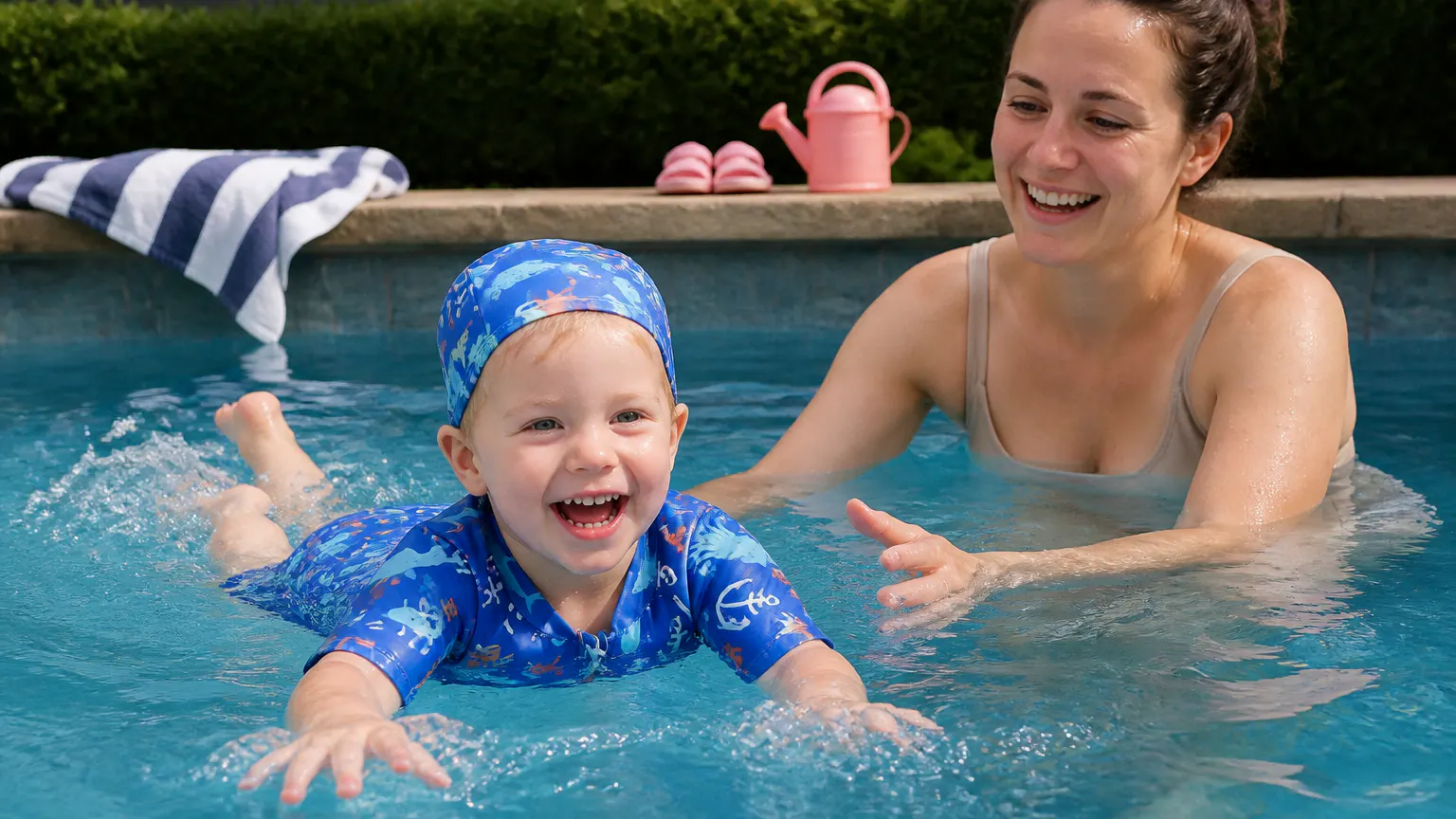
Held flat, arms and legs free
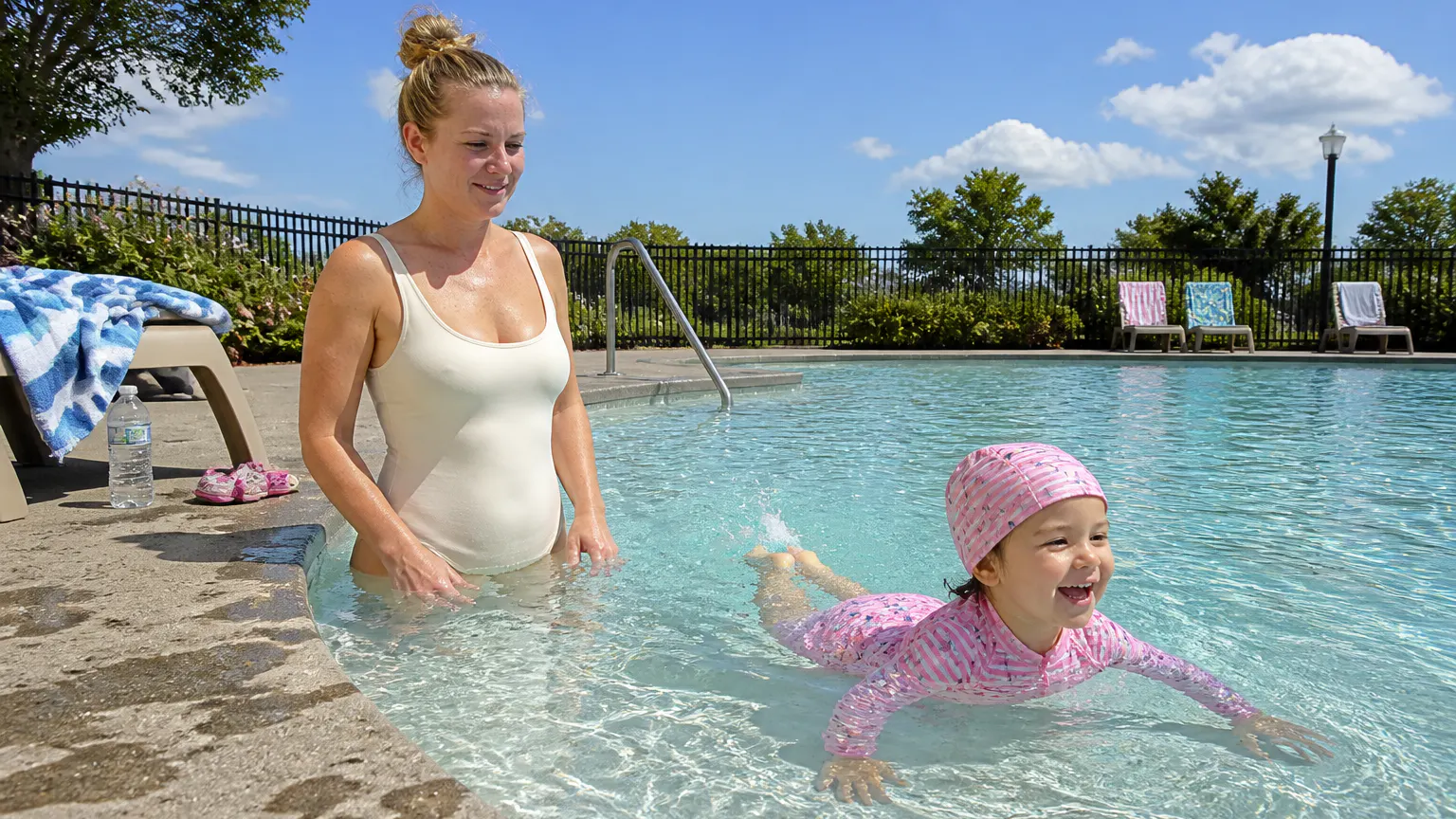
Foam panels sit across the chest and torso, so the lift comes from underneath and holds the child horizontal, chest-down. Nothing wraps the arms and nothing crosses the shoulders - arms and legs are completely unrestricted, so paddling and kicking is actually possible.
Swim schools publish openly on this: rather than helping children orient horizontally, upright positioning holds them vertical - and parents report it becomes the default habit their swim instructor then has to undo.
The panels come out as they improve
Take a panel out each time their swimming gets stronger. Buoyancy steps down across the season instead of the suit being replaced - one suit carries the whole learning curve.
On in seconds, front zip
Unzip, step them in legs-first, arms through the sleeves, zip from the waist up to the chin guard. No wrestling with straps while they wriggle at the poolside.
One In Seven Parents Said Their Float Suit Didn't Float.
That fear isn't about wasting money. It's about a child who goes under once and then won't get back in the water for a year. So here is exactly where this suit's buoyancy comes from, and what you can check before you buy.
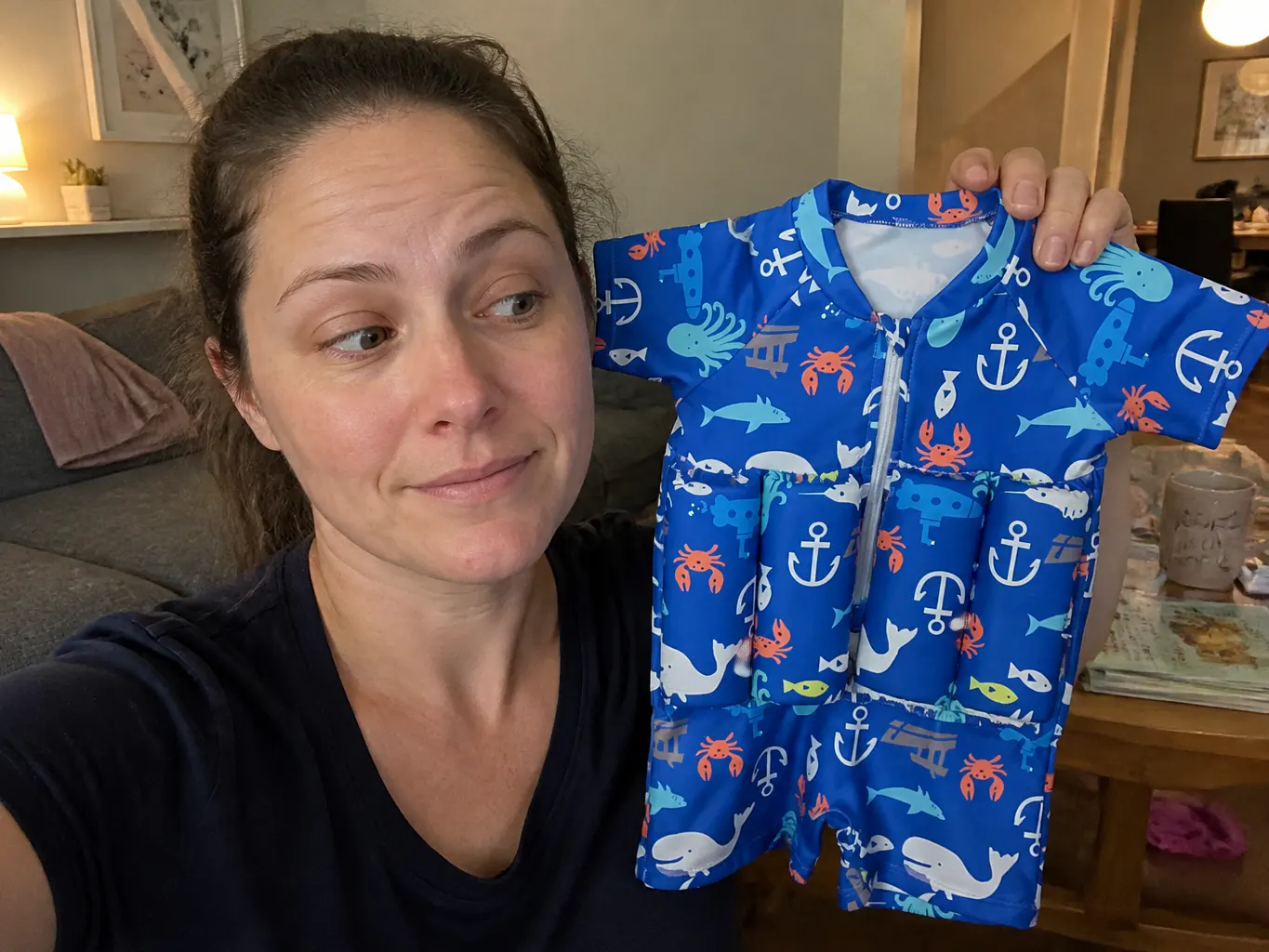
- Foam across the chest and torso The lift comes from panels distributed under the chest and along the torso - not from thin floats strapped to the upper arms.
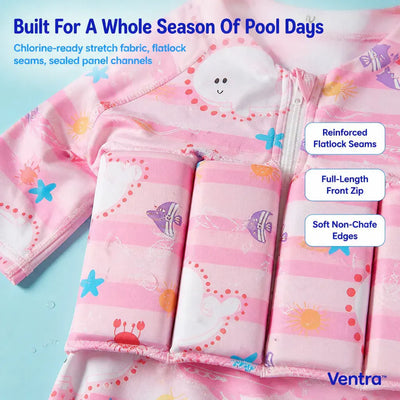
- Panels seated in stitched housings Each panel sits in its own sewn channel inside the suit rather than floating loose in a lining, so it stays where it is meant to sit.
- Buoyancy dialled to your child Panels are removable, so you start with full support and take them out one at a time as their swimming gets stronger.
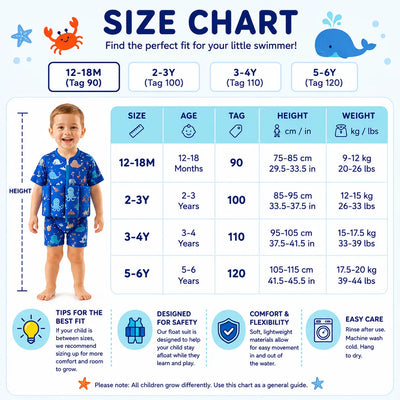
- Four sizes, 12-18M to 5-6Y 12-18M (Tag 90), 2-3Y (Tag 100), 3-4Y (Tag 110) and 5-6Y (Tag 120) - so the panels sit against the right part of a small torso.
How to pick the size
Choose by your child's current size. If they are between two sizes, size up for a snug-not-tight fit - a snug fit is what keeps the panels seated flat under the chest instead of shifting around while they move.
What Changed By Week Three
Real notes from parents who were in the water with them, with the child's age and how long they had been using it.
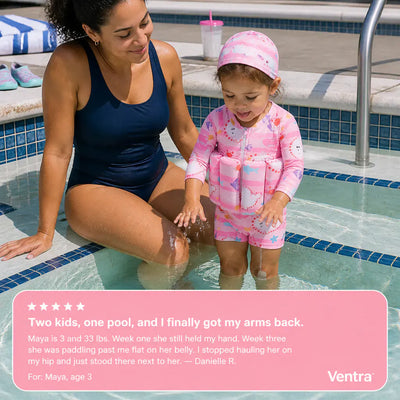
First pool day I did not spend two hours holding her. She goes out a few feet, paddles back, goes again. My arms are genuinely fine at the end of it now.

Priya N.
Verified buyerWorks exactly as described and he actually kicks in it. Only note: I ordered his usual size and it was snug on the shoulders, so if you are between sizes go up.

Marcus T.
Verified buyerHe came out of the puddle jumper hanging upright like a little buoy. Two weeks in this and he is flat on his front with his arms going. His swim teacher noticed before I said anything.

Naomi B.
Verified buyer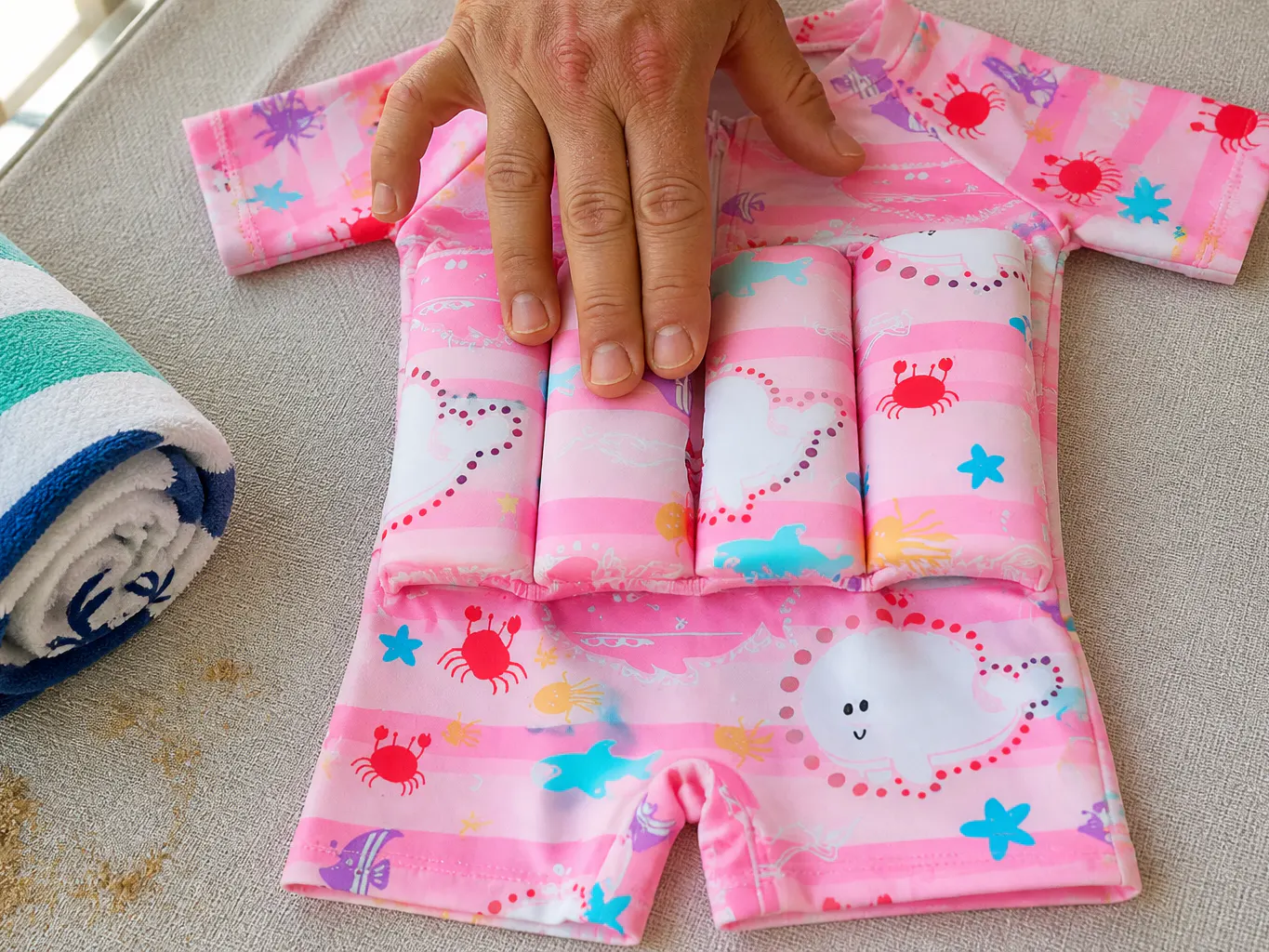
I bought this for my grandson before their trip. My daughter said the foam stayed exactly where it should even when he was thrashing about, which was the thing I was worried about. She has taken one panel out already because he is getting stronger. The cap matching was a lovely touch.

Barbara W.
Verified buyerShe screamed at armbands every single time. Zero arguments with this because there is nothing gripping her arms - it goes on like a swimsuit and she forgets it is there.

Danielle O.
Verified buyer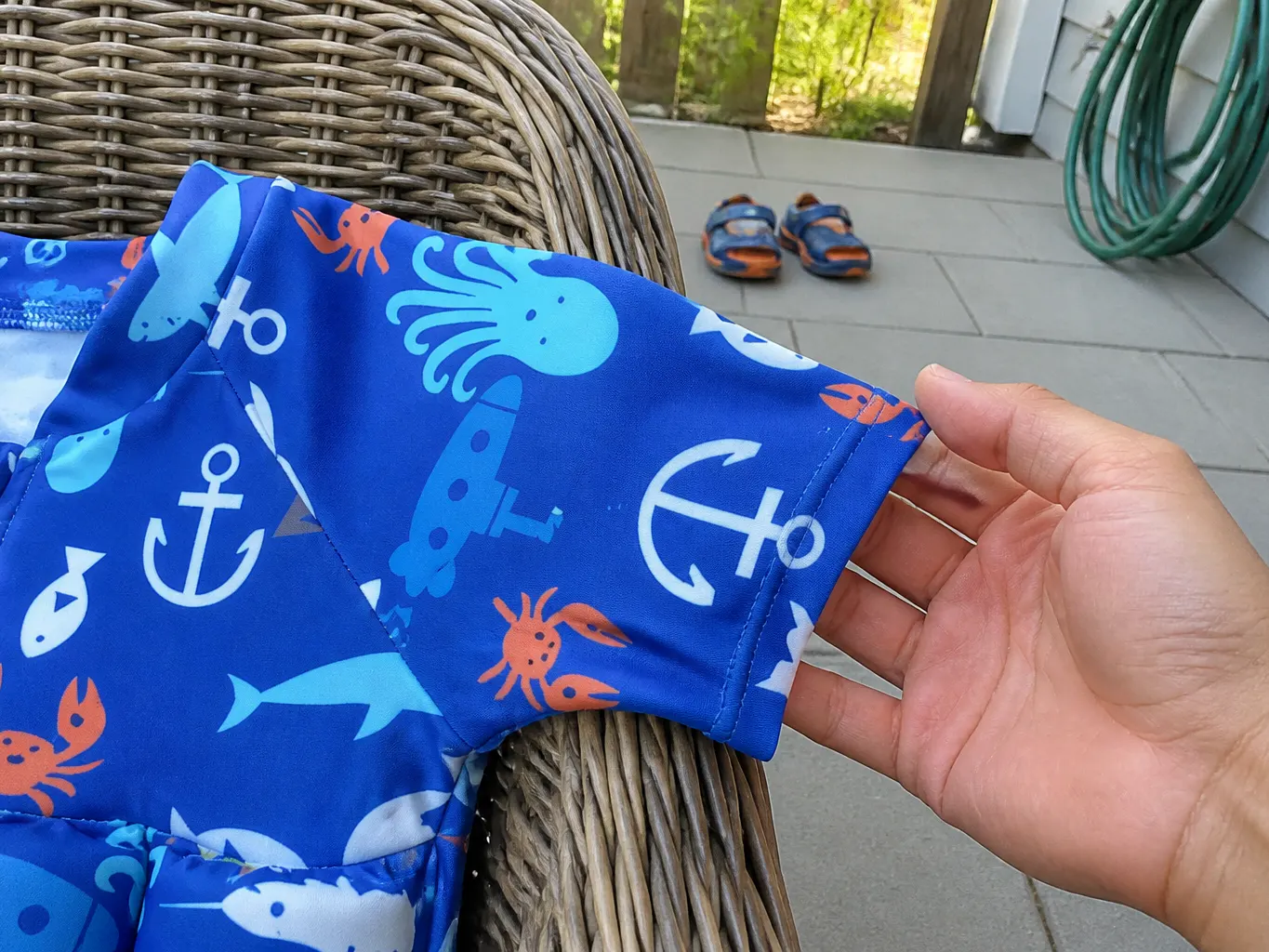
The face on him the first time he realised he was moving on his own was worth the money by itself. He now asks to go swimming, which was not happening in April.

Elena V.
Verified buyerTwo Arms. One Pool. More Than One Kid.
You already know the maths. Two hours in the shallow end, one child on your hip, the other one tracking towards the steps. It is not that you do not want to hold them. It is that you cannot hold one and watch the other at the same time.
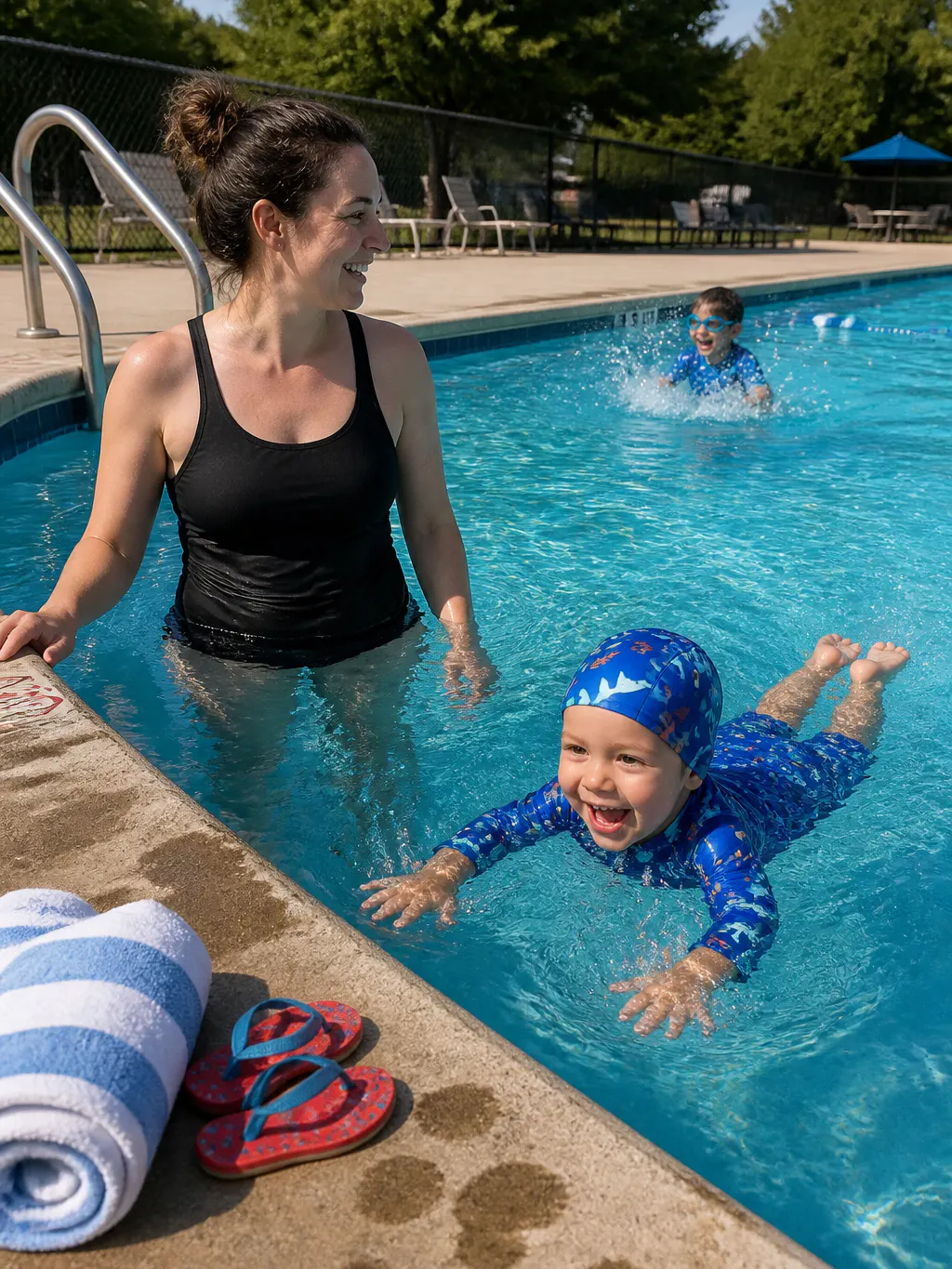 Arms at your sides. Still right there.
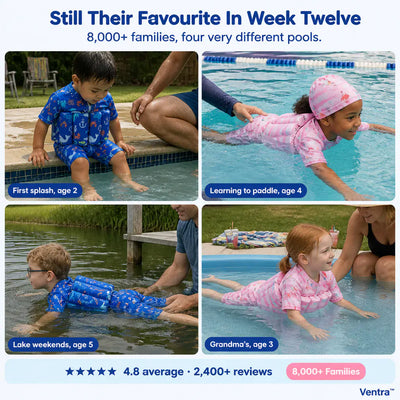
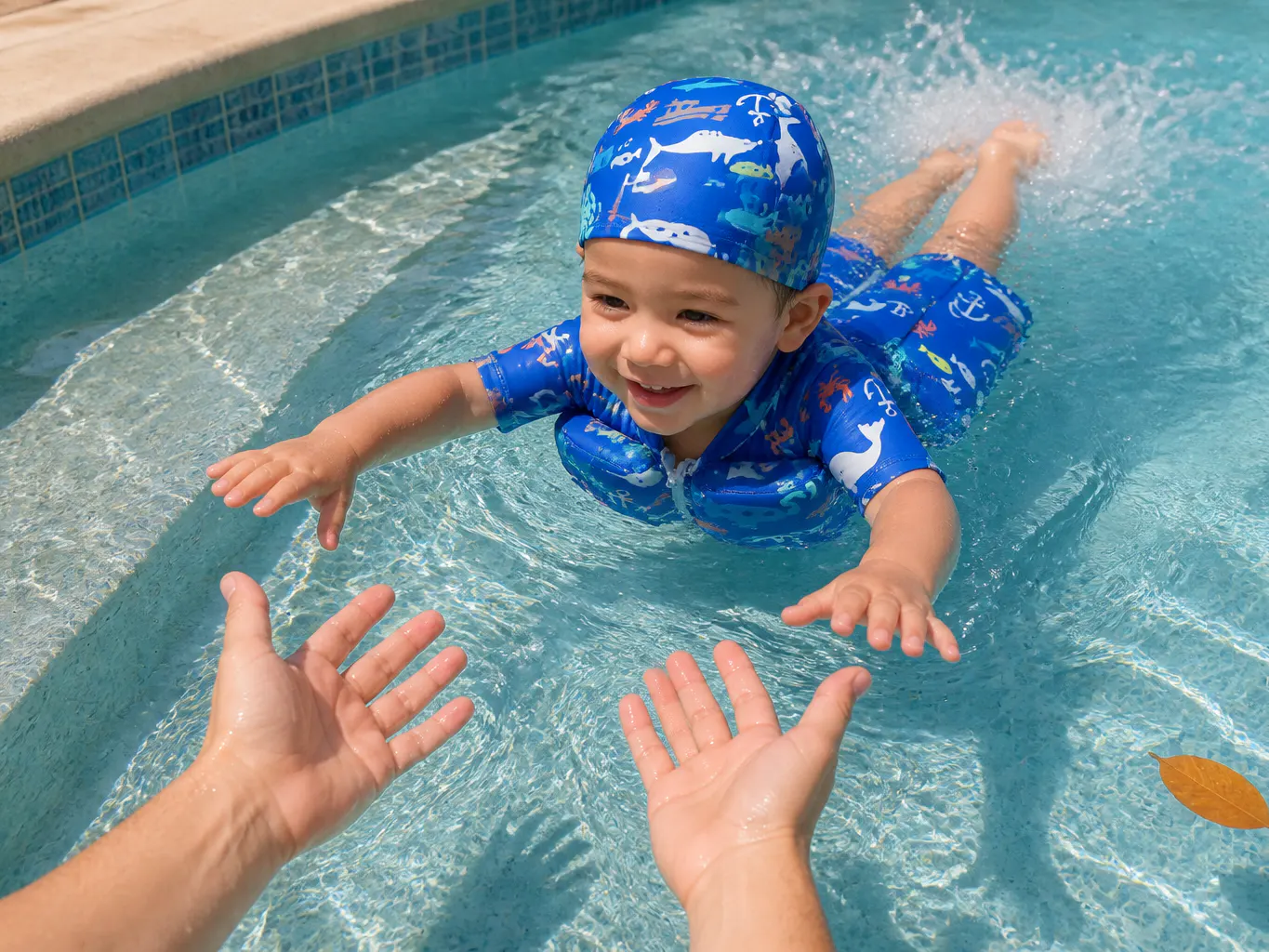 Arms actually doing something
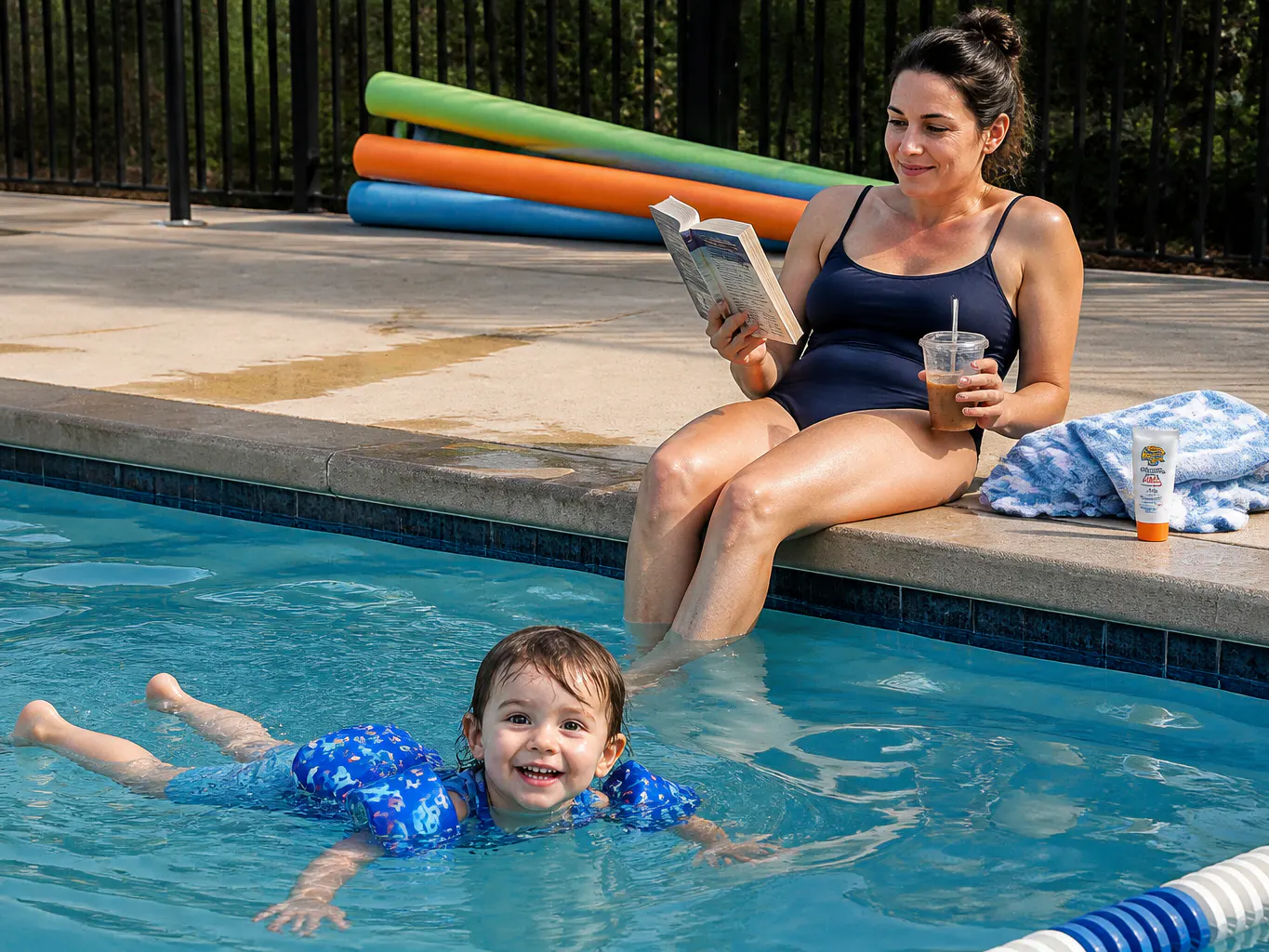 Zip, cap, in the water
 Back to the edge, on their own
This is the difference between a parent who is holding a child up and a parent who is teaching one to swim. You are still within arm's reach. You are just no longer the flotation.
The Questions Parents Actually Ask Us
Straight answers, including the ones where the honest answer is no.
The suit is UPF swimwear fabric across the torso and arms, with foam buoyancy panels housed in stitched channels inside the chest and torso. It fastens with a front zip that runs up to a fabric chin guard, so the zip pull never sits against the throat.
Being straight with you: this is a learn-to-swim training aid designed to be used with an adult within arm's reach. It is not a life jacket, it is not an approved flotation device, and it does not replace supervision. Swim instructors say the same thing about every product in this category, and we would rather tell you that up front than let you find out later.
There are four sizes: 12-18M (Tag 90), 2-3Y (Tag 100), 3-4Y (Tag 110) and 5-6Y (Tag 120), covering roughly one to eight years depending on your child's build.
Choose by your child's current size rather than their birthday. If they sit between two sizes, size up - you want snug, not tight. A snug fit is what keeps the foam panels seated flat under the chest instead of shifting when they twist and kick.
Each foam panel lifts out of its stitched channel inside the suit. You start with all of them in place while they are still finding their confidence, then take one out at a time as their swimming gets stronger.
The point is that buoyancy steps down gradually across a season instead of going from full support to none overnight - and it means the same suit carries them through the whole learning curve rather than being outgrown in capability after a month.
Nothing grips their arms. That is usually the whole argument - armbands clamp the upper arm and get itchy, so getting them on becomes a negotiation every single time.
This goes on like a swimsuit: legs in, arms through, zip up. The buoyancy sits across the chest and torso, the seams are finished flat under the arms, and the fabric is soft stretch swimwear knit. Most kids stop noticing they are wearing it within a few minutes.
No. It complements them.
What a suit like this does between lessons is let a child practise the horizontal, chest-down position with their arms and legs free to move - which is the position their instructor is trying to build. It is practice time, not tuition.
The matching printed swim cap comes included in the set and pulls on like a standard swim cap - snug across the head, no fastenings to fiddle with.
The suit is made for both pool and beach. The UPF fabric covers the torso and arms, which is exactly the area where sunscreen keeps washing off after twenty minutes of splashing.
Free shipping worldwide. If it does not fit or it is not right, you have a 30-day money back guarantee, and every suit carries a 1 year warranty.
On the value question: this is one suit that covers the whole learning curve rather than a floatie you replace when they progress. The panels come out as they improve, and the UPF fabric plus the matching cap mean you are not also buying a rash guard and a swim cap separately. We would rather you judge it on how long it lasts you than on how it compares to the cheapest thing on the shelf.
You're Not Choosing What Keeps Them Up. You're Choosing What They Learn.
Foam across the chest and torso, arms and legs completely free, panels that come out as they get stronger - with you standing right there at arm's reach.
Torso-mounted panels, arms free - always with an adult within arm's reachFree shipping worldwide - 30-day money back guarantee - 1 year warranty