



You check your part every morning. And it keeps getting wider.
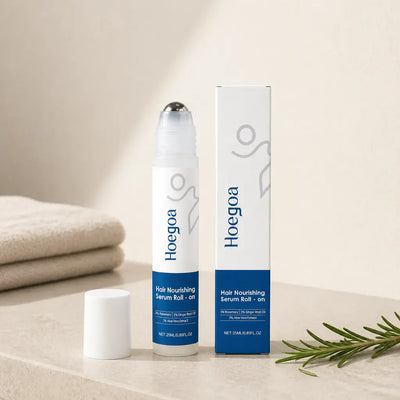
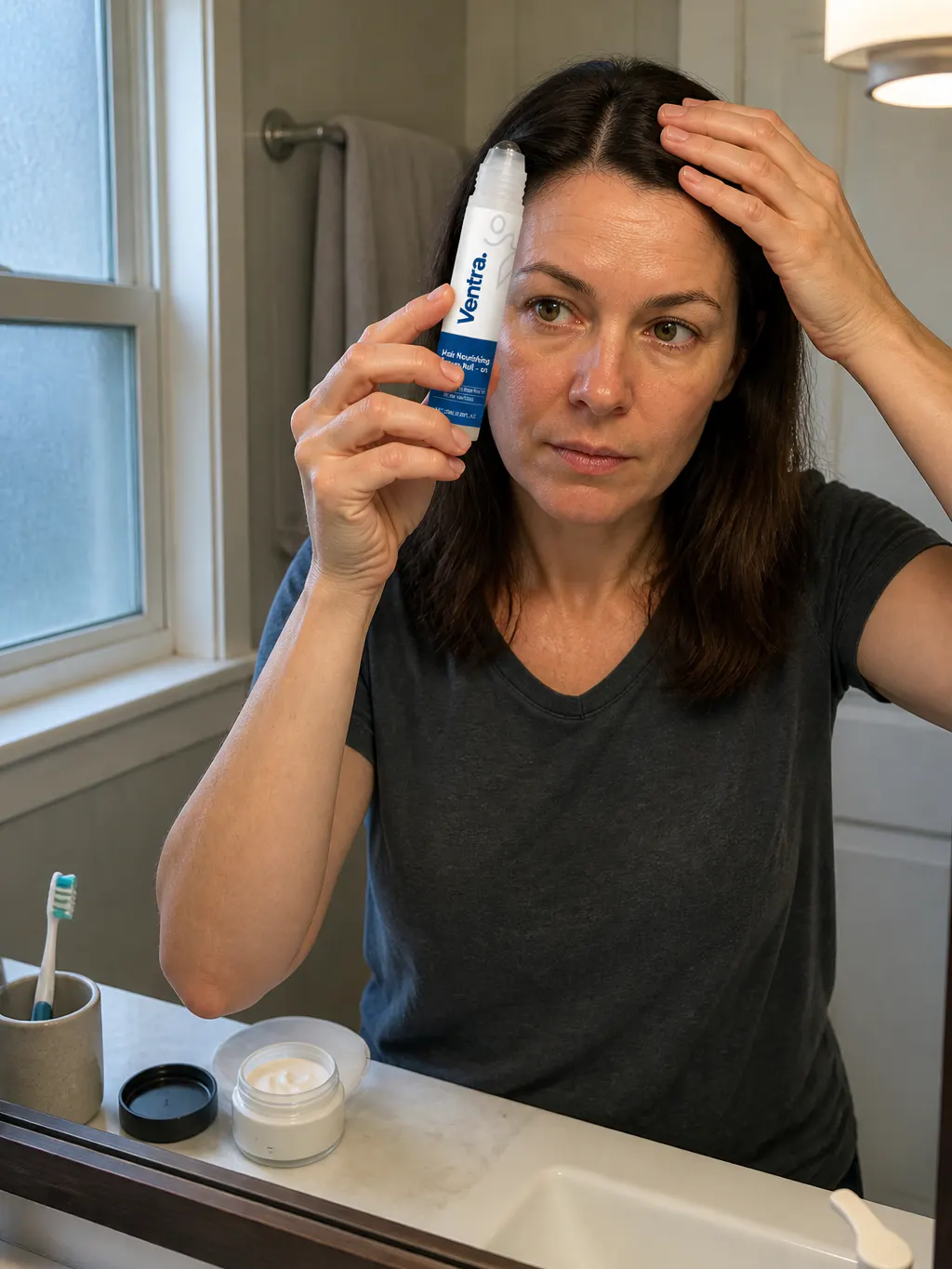
A serum in an aloe base - not an oil - rolled straight onto the scalp with a metal ball. Dry hands, about 30 seconds, no wash day. Your hair falls normally the second you're done.
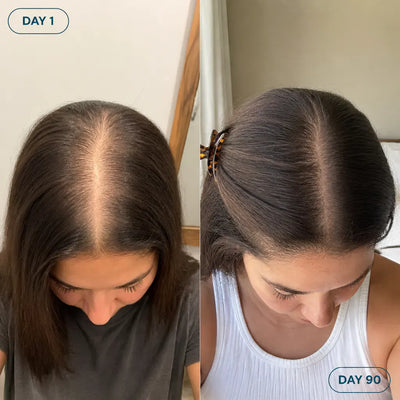
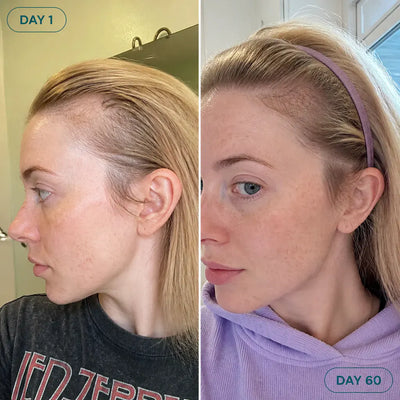
Baby hairs first. Density later. Here's what that actually looks like.
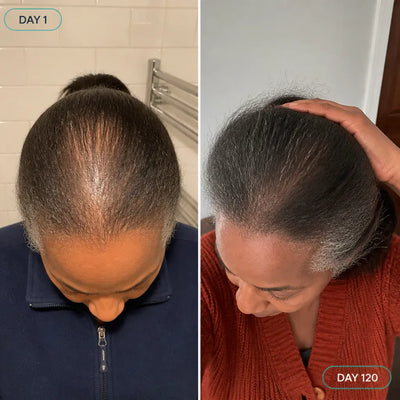
Photographed in ordinary bathroom light, by the women themselves. Every timeframe below is the real one - not a week-one miracle.
 Before
After
After 4 weeks - new baby hairs at the hairline
Before
After
After 4 weeks - new baby hairs at the hairline
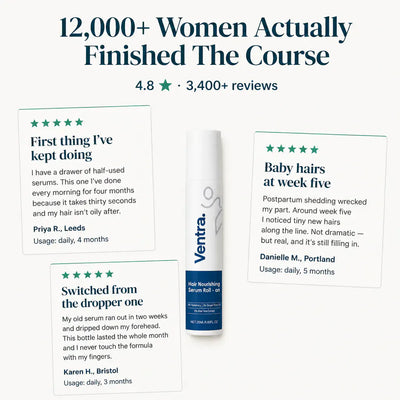
Four weeks in and there are tiny new hairs along my hairline. It absorbs so fast I can do it and leave for work.
 Before
After
After 8 weeks of daily use
Before
After
After 8 weeks of daily use
The handfuls in the shower stopped around week six. I still can't quite believe it, honestly. I finally finished a bottle of something.
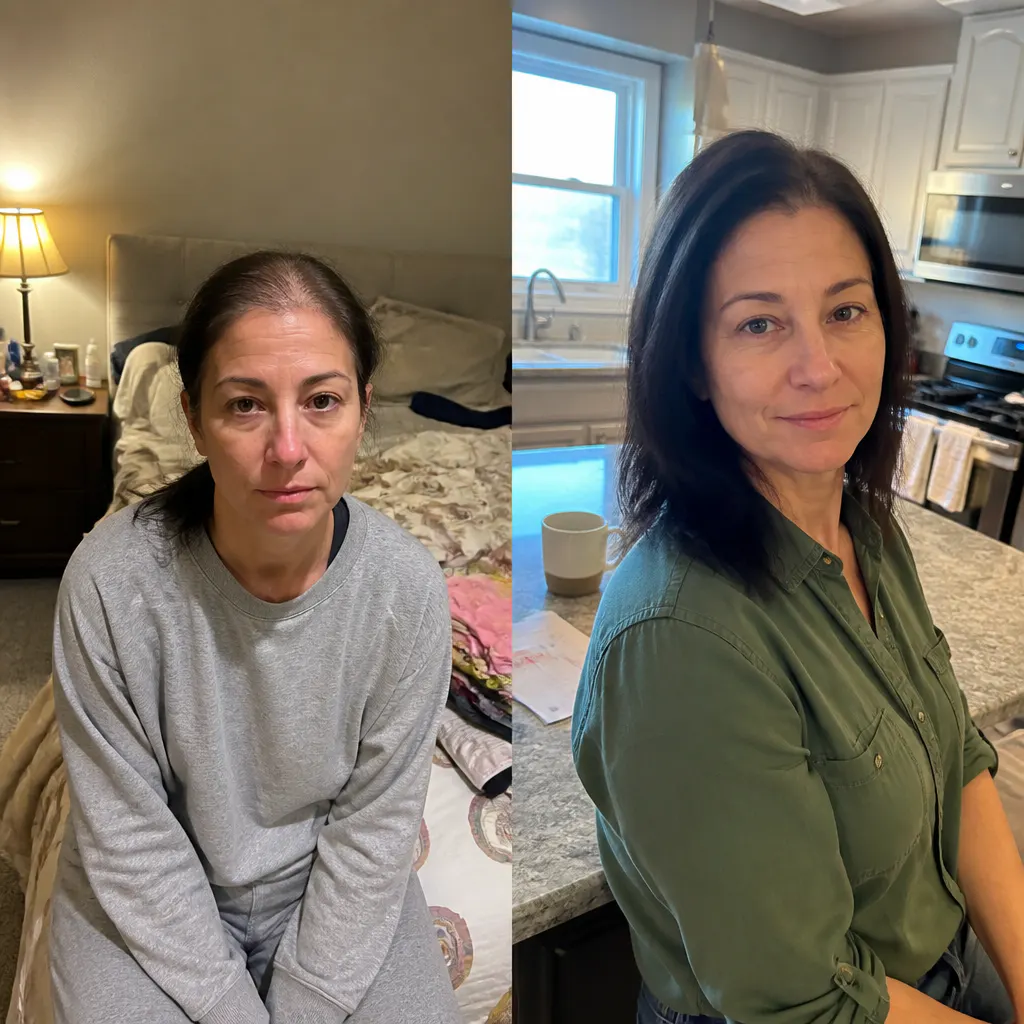 Before
After
3 months in
Before
After
3 months in
My part was getting wider every year and my doctor shrugged. Three months of this and I wore a ponytail to my daughter's wedding without thinking about it once.
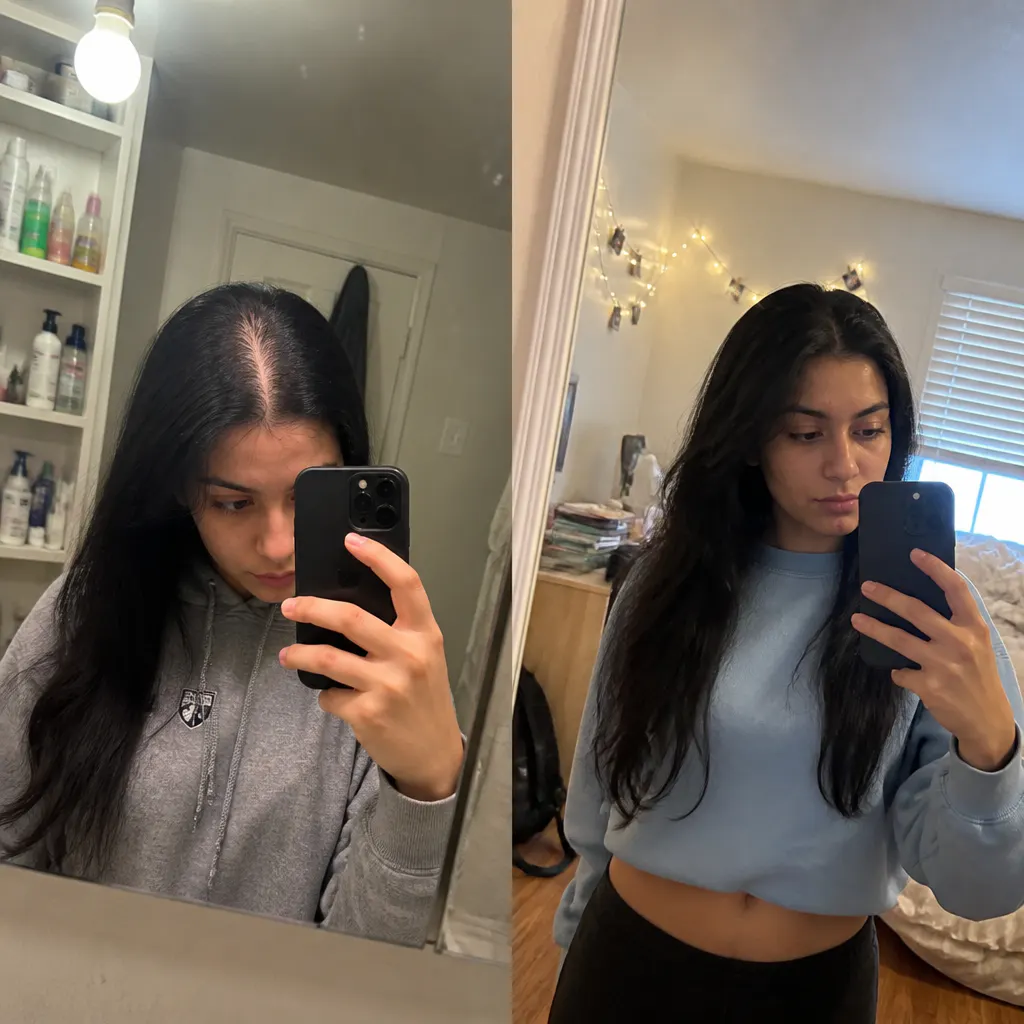 Before
After
5 months of daily use
Before
After
5 months of daily use
Month three is when the density showed up. Worth the wait.
 Before
After
After 10 weeks
Before
After
After 10 weeks
The herbal rosemary-ginger scent took me a day to get used to - it fades once it absorbs. Everything else about it I love, and my part is definitely narrower.
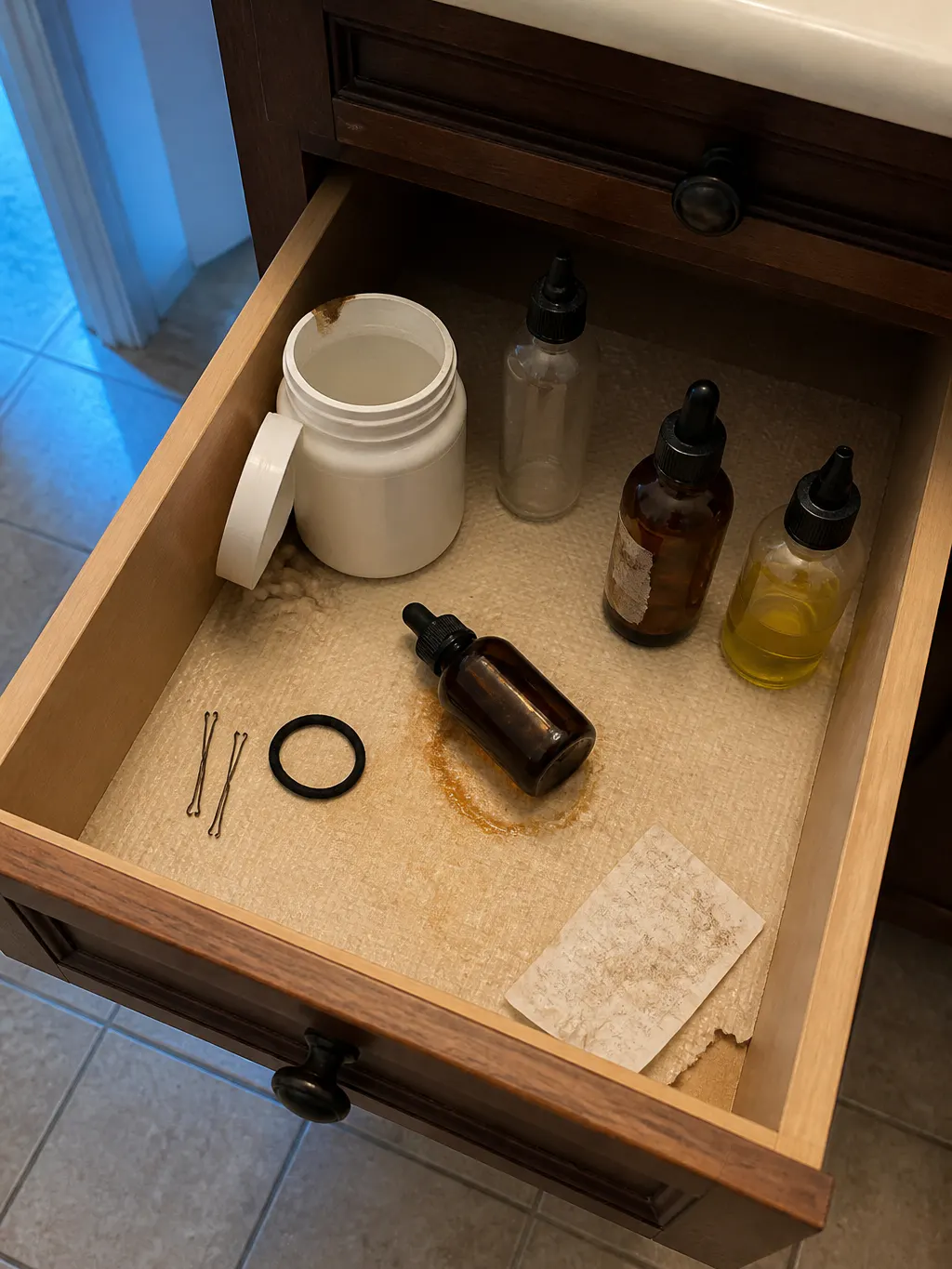
Four things in there. All of them half-used. None of them your fault.
You didn't quit because you're lazy. You quit because every one of these asked you to choose between treating your scalp and leaving the house with hair you can stand.
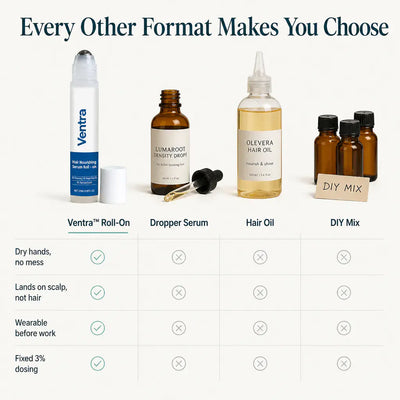
- The dropper serum It drips down your forehead before it reaches your scalp, and then you have to rub it in with oily fingers. So it only ever happens on a Sunday night - which means it never really happens.
- The DIY oil mix from TikTok Castor, rosemary, coconut, pumpkin seed, jojoba. It worked for four applications, then you got tired of greasy hair and a towel on your pillow. It was never a formula you could wear to work.
- The biotin bottle at the back You take it about half the time. Nothing on a shelf gets taken daily unless it's already inside something you do daily.
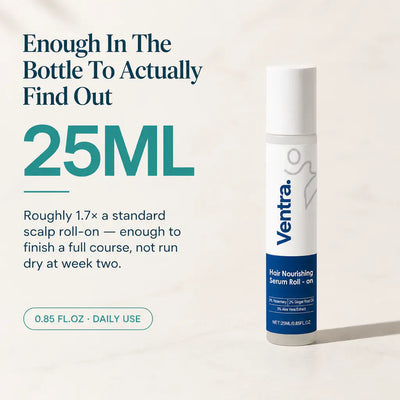
- The roll-on that ran out in two weeks The format was right - the fill wasn't. A 15ml bottle at a daily scalp dose is empty long before the three-month mark when anything could possibly show. You never found out if it worked.
Every one of those formats was designed for a wash day. Not for 6:40am on a Tuesday. That's a design problem, not a willpower problem.
Thirty seconds. Dry hands. Then you leave the house.
No shower, no wash day, no towel on the pillow. This is the whole routine - which is precisely why it is one you will still be doing in month three.
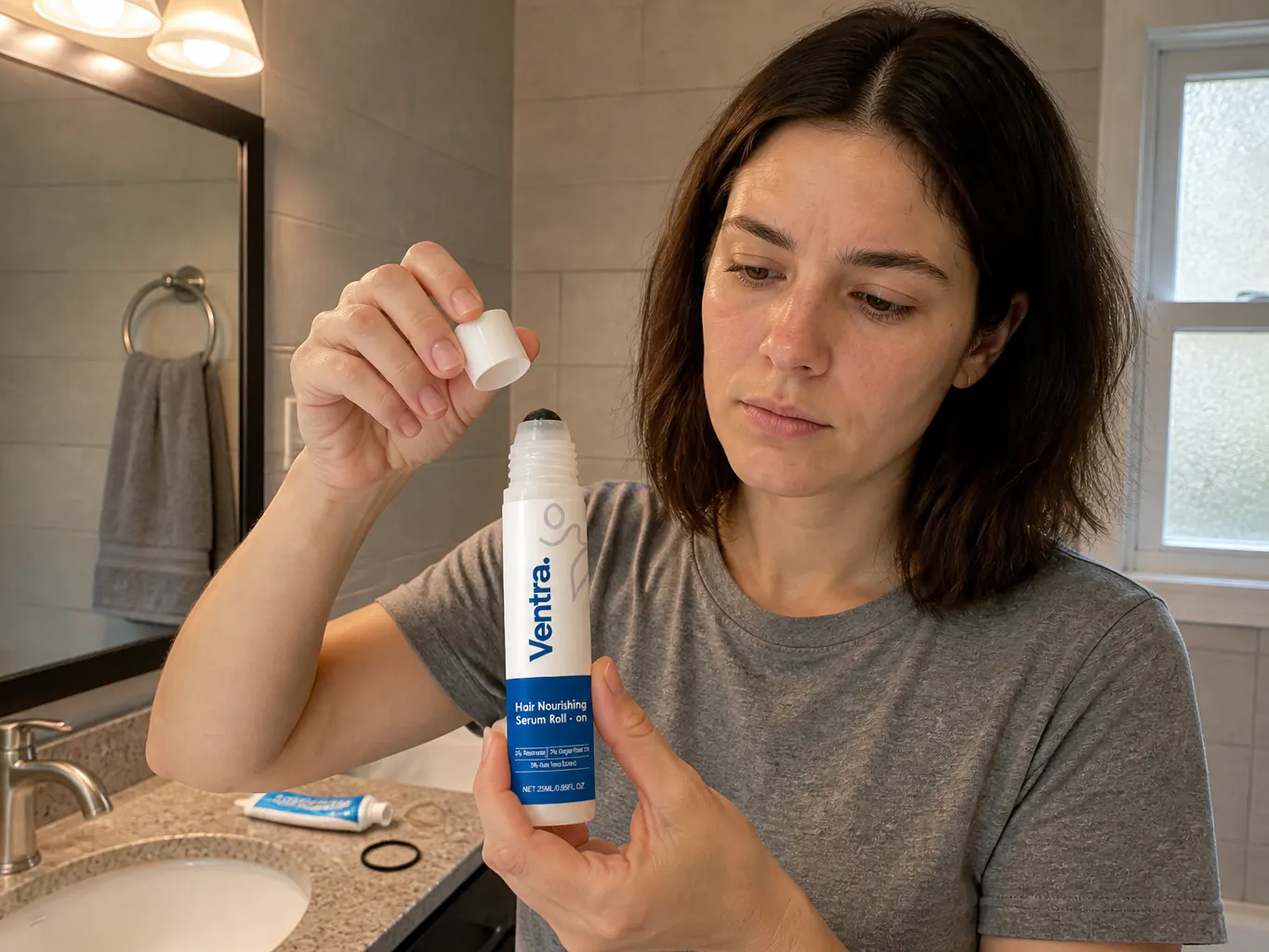
Uncap and part your hair
Take the cap off and part your hair to expose a clean line of scalp - start with your natural part, the place you check in the mirror every morning.
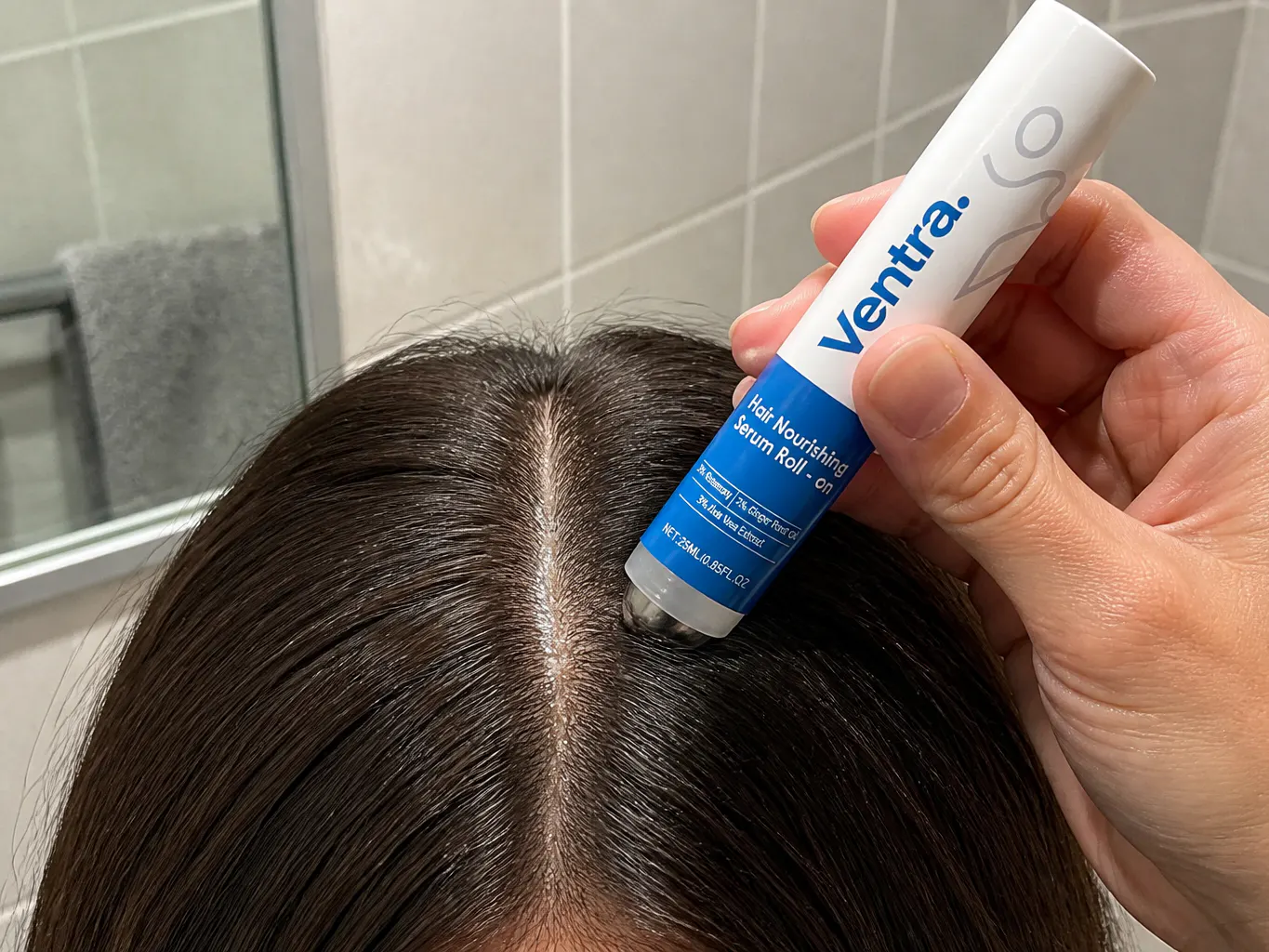
Roll along the parting
Press the metal ball to the scalp and drag it along the line. It rolls freely and lays down a thin wet stripe you can actually see. Repeat across the crown, the temples and the hairline.
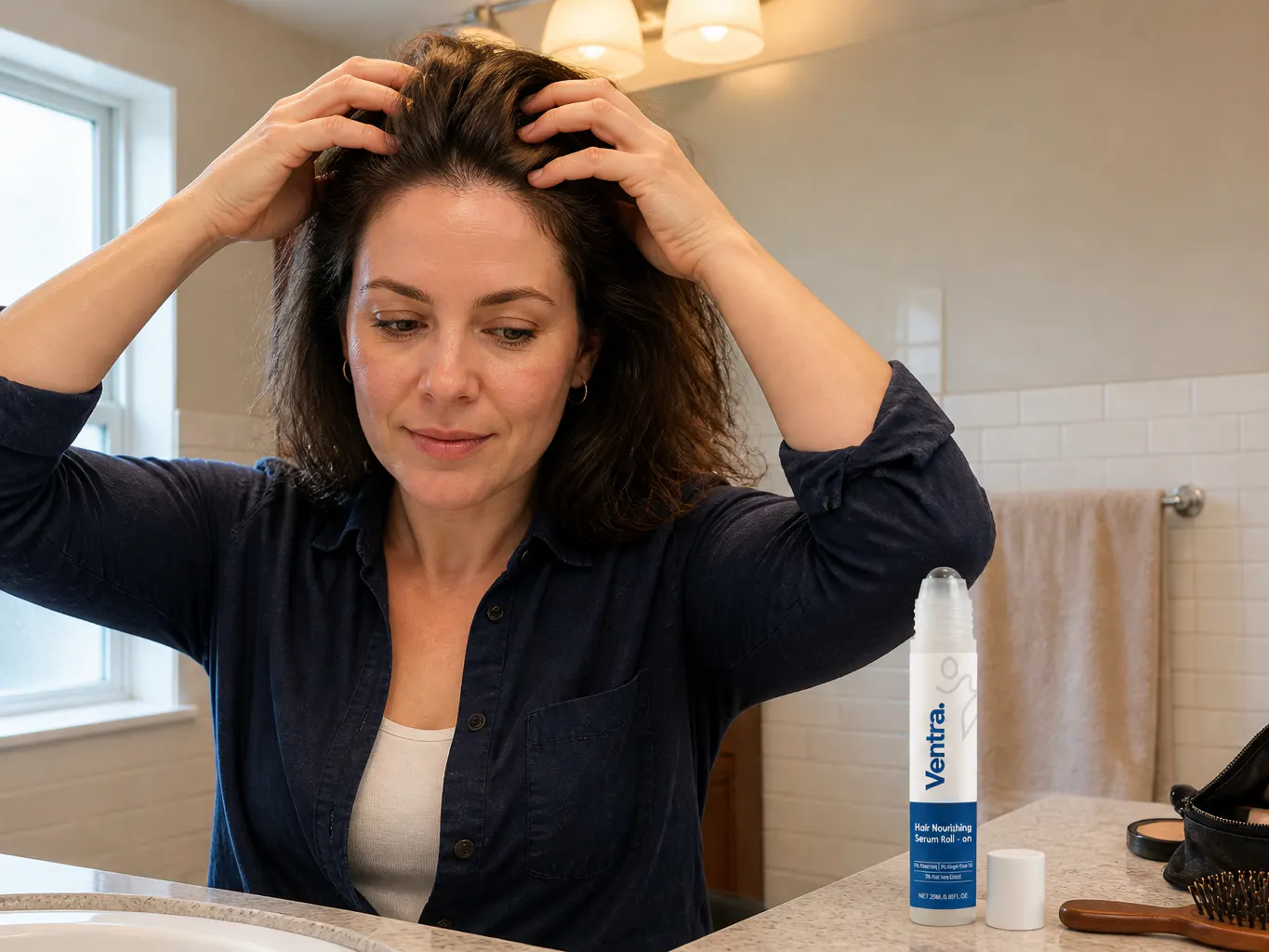
Massage in, style, go
Work it in with your fingertips for about a minute so it spreads between the lines. Then style your hair and leave. No rinse, no shower, your hands stay dry.
Apply daily to a dry or towel-dry scalp, before styling. Leave in - there is no rinse step. Start to finish, about 30 seconds.
The formula matters. The format is why you'll still be using it in month three.
Compared on the things that actually decide whether a scalp treatment gets used: mess, precision, absorption, and whether there is serum left when it starts to matter.
Metal roller-ball serum
Dropper serum
Rosemary oil / DIY mix
This is a scalp treatment serum, not a hair oil - the distinction is the whole point of the comparison above.
Rosemary went viral. It was in a randomized trial nine years before that.
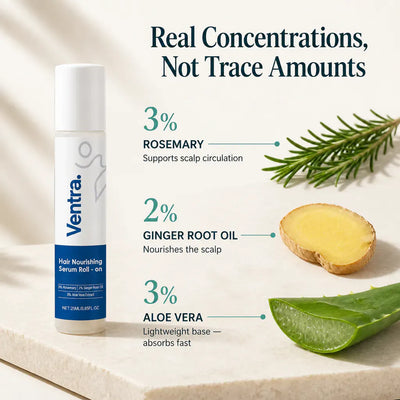
You already know what rosemary is. What matters is whether a formula contains a real, stated concentration of it - or a trace amount and a marketing label.
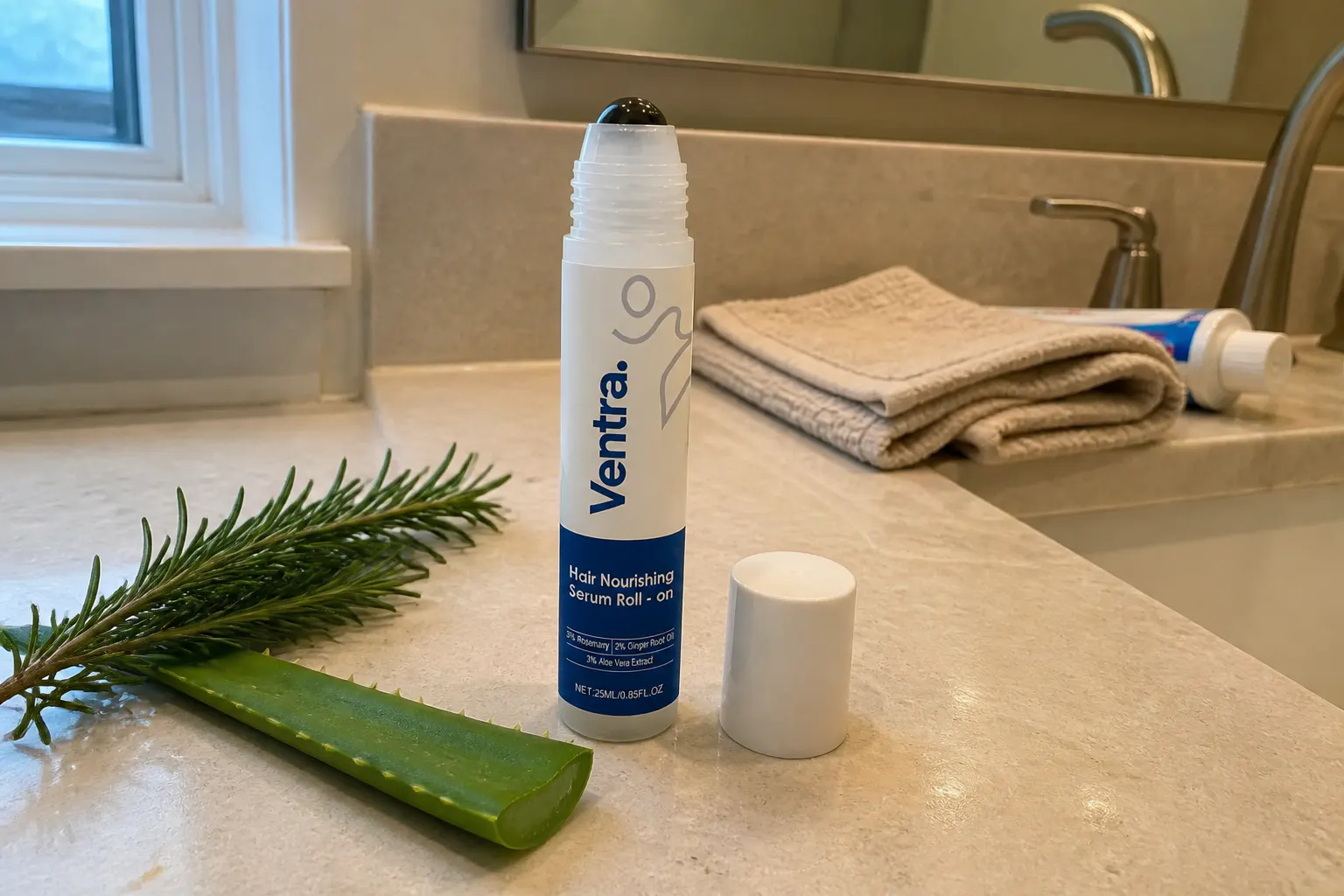
Rosemary - at a stated concentration
In a 2015 randomized comparative trial, rosemary oil matched minoxidil 2% on hair count at six months - and the rosemary group reported significantly less scalp itching. That is the evidence behind the ingredient, and it is why 3% is on the label rather than 'contains rosemary extract'.
Panahi et al., 2015 - randomized comparative trial, rosemary oil vs minoxidil 2% in androgenetic alopecia (PubMed 25842469). This is ingredient-level research, not a clinical trial of Ventra.
Ginger root oil
A warming scalp stimulant that pairs with the rosemary - this is what gives the serum its herbal note.
Aloe vera extract
The base. It is aloe, not oil, which is the entire reason this absorbs in seconds instead of sitting on fine hair as a film.
Tocopherol (vitamin E)
Keeps the actives stable in the bottle across a full multi-month course.
Safe for daily scalp contact: this is a diluted 3% formulation in an aloe base, formulated to go directly on skin - unlike neat rosemary essential oil, which must be diluted before it touches your scalp.
Most scalp treatments don't fail because the formula is wrong. They fail because the bottle empties before the calendar does.
Nothing happens in week one. Here is what actually happens, and when.
Every product that promised you results in seven days is the reason you stopped trusting hair pages. This is the real curve - the one the category runs on.
-
1
Weeks 1-2
Your scalp feels different before your hair does
Less tight, less dry, cleaner between washes. The metal tip is noticeably cooling as it rolls. This is not growth - it is the scalp environment changing, which is what has to happen first.
-
2
Weeks 3-4
The first baby hairs at the hairline
Short, fine, new hairs along the part and at the temples. This is the earliest real signal reported by users of this format, and it is the one to look for. Take a photo of your part on day one so you have something to compare against.
-
3
Weeks 6-8
Less in the brush, less on the shower floor
Reduced shedding usually shows before added density does. It feels like less bad news rather than good news - but it is the turn.
-
4
Months 3-6
Visible density along the part
This is the honest window in which the part narrows and the ponytail feels thicker. It is also exactly why the size of the bottle matters more than anything else on this page.
One thing worth knowing before you start: a small amount of extra shedding in the early weeks is a documented, normal phase in this category. It is not the product failing. Knowing that in advance is often the difference between finishing the course and abandoning it at week three.
Thinning isn't one thing. Here's where this fits.
Postpartum shedding and a perimenopausal part are different experiences with the same daily requirement: something you can actually apply every morning.
Postpartum shedding
You have about ninety seconds to yourself in the morning and no wash day in sight. Dry hands and no rinse is the only routine that survives a newborn.
A perimenopausal part
The widening is gradual, so the treatment has to be too. A bottle that lasts a full course matters more here than anywhere else.
Always-fine hair
Your scalp has always shown through and every oil you've tried made it worse. An aloe-based serum on the scalp, not the shaft, is the whole point.
Stress or telogen shedding
After a hard year the shedding usually settles before density returns. Roll it on daily through the recovery window rather than in occasional bursts.
Apply daily to a dry or towel-dry scalp, before styling. Leave it in - there is no rinse step, and no wash day required.
Men with early thinning can use it exactly the same way. If your scalp is broken or irritated, or you are treating a diagnosed condition, patch test first and check with your doctor.
The verdicts that matter: fine hair, daily use, one full bottle.
Sorted by the questions people actually ask before buying - grease, absorption, whether the roller keeps working, and whether the bottle lasted.
Fine hair, and it did not go flat once. That was the only thing I cared about.
 Tessa H.
Verified
Tessa H.
Verified

I had written off everything after a rosemary oil ruined a blowout. This absorbs in seconds and sits on the scalp instead of the hair. My part is genuinely narrower than it was in September and I have not had to change a single thing about my morning.
 Joanna P.
Verified
Joanna P.
Verified
Four months of daily use and the ball still rolls exactly the same as day one. No sticking, no jamming, no shaking it to get anything out. The last one I owned quit on me in a fortnight.
 Bea N.
Verified
Bea N.
Verified
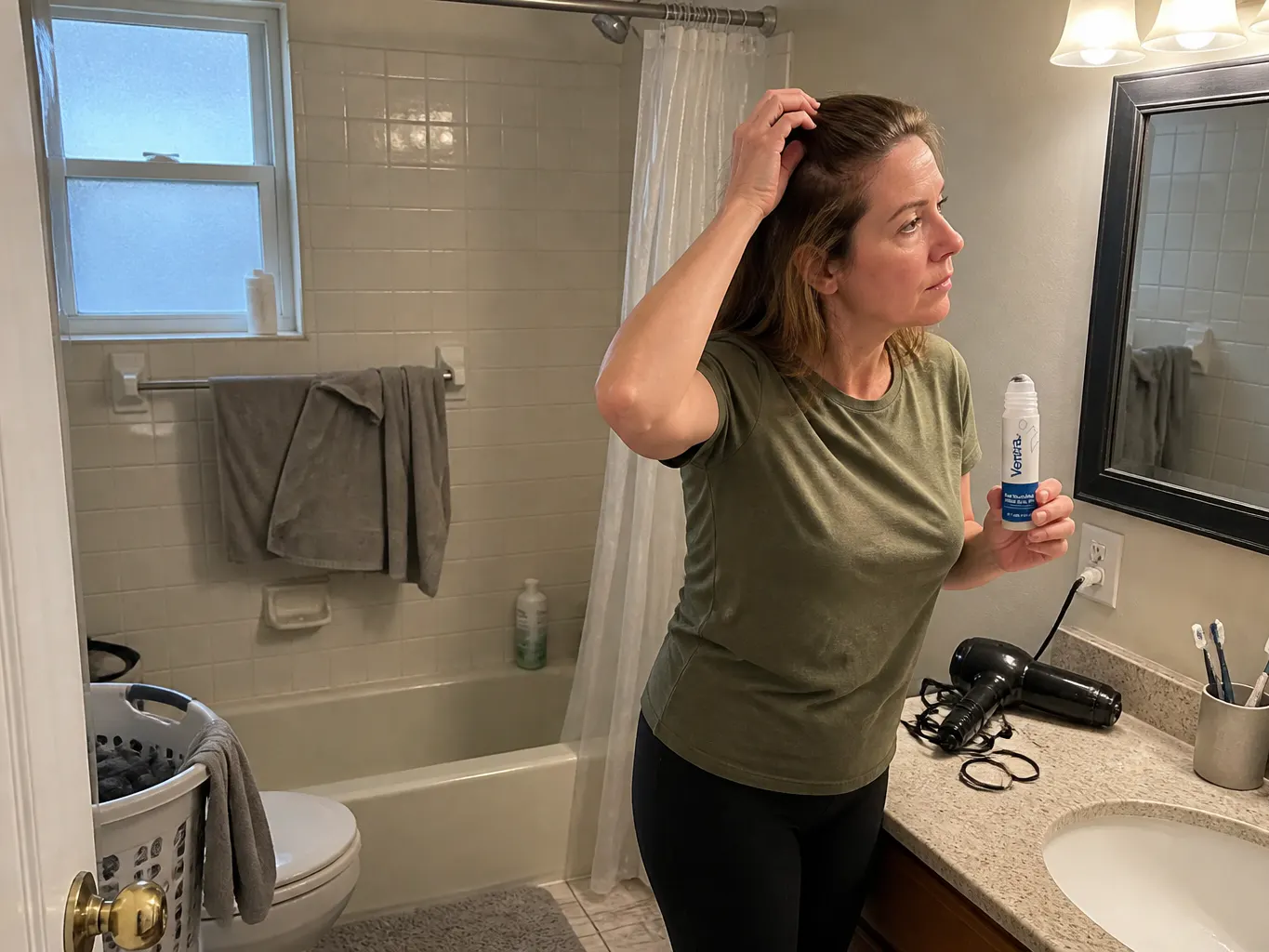
Goes under my usual styling with zero difference. No residue, no needing to wash it out later.
 Rachel V.
Verified
Rachel V.
Verified
One bottle carried me from January to the middle of March using it every single day. That has never happened to me with a treatment before, and it is the only reason I got far enough to see anything change.
 Marguerite L.
Verified
Marguerite L.
Verified
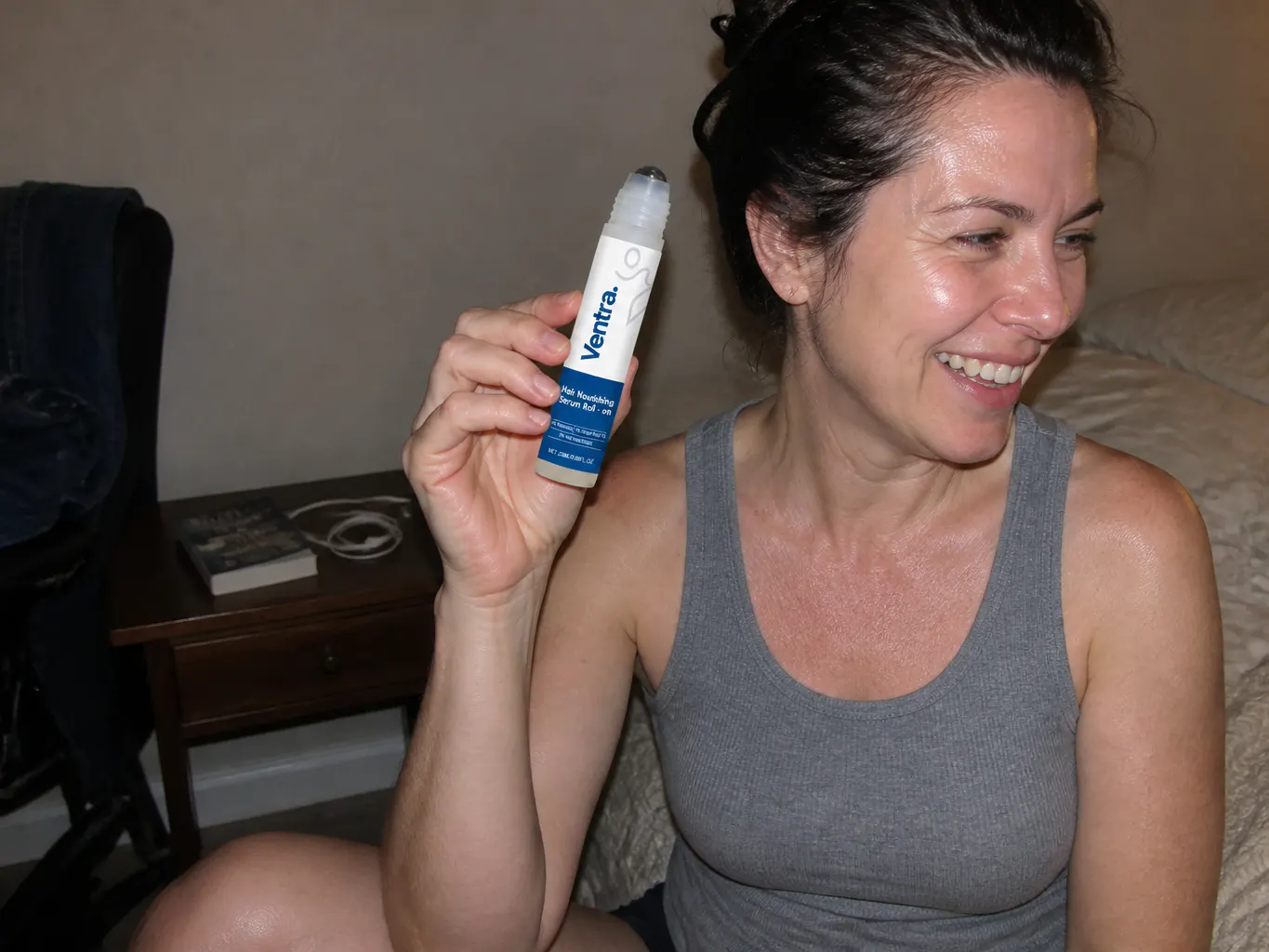
The rosemary and ginger scent is stronger than I expected for the first minute - it does fade. Docking a star for that alone, because the results and the applicator are genuinely excellent.
 Yasmin K.
Verified
Yasmin K.
Verified
The seven questions people ask before their first bottle.
In the order they usually get asked - starting with the one about fine hair.
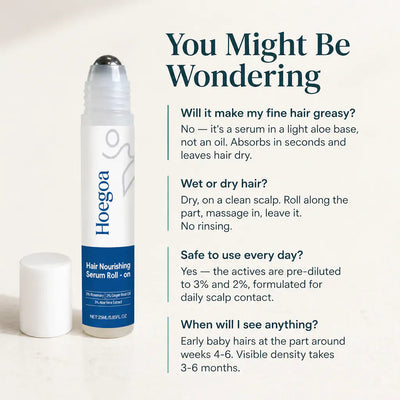
No, and this is the objection the formula was built around. It is a serum in a 3% aloe vera base rather than an oil, so it absorbs into the scalp within seconds instead of sitting on the hair shaft as a film. The roller also puts it on the scalp along your part, not down the length of your hair.
The fine-hair verdicts further up this page are all from women who came to it after being burned by an oil.
The first real signal is usually new baby hairs at the hairline and along the part around weeks three and four. Reduced shedding tends to follow at weeks six to eight. Visible density along the part is a three to six month change - that is the honest category timeline, and it is the reason bottle size matters.
Photograph your part on day one. You will not notice a gradual change in the mirror without something to compare against.
Yes. This is a diluted 3% rosemary formulation in an aloe base, formulated specifically for daily contact with the skin of the scalp. That is a different thing from neat rosemary essential oil, which must be diluted in a carrier before it touches your scalp.
If your scalp is broken or irritated, or you are treating a diagnosed condition, patch test on a small area first and check with your doctor.
Dry or towel-dry scalp, before styling. Leave it in - there is no rinse step and no wash day required. That is the whole reason it fits into a workday morning.
If you are washing your hair that day, apply it after washing and towel-drying rather than before.
Herbal - rosemary and ginger root, which is exactly what you would expect from the two actives. It is noticeable for the first minute and then fades as the serum absorbs into the scalp.
Several reviewers mention it takes a day or two to get used to. Nobody mentions it lingering.
Yes to all three. It goes on the scalp rather than the hair, so it sits underneath your usual routine and does not interfere with styling products, conditioner or color. Apply it first, then style as normal.
Colored hair is fine - it is not a clarifying or stripping formula. Men with early thinning use it in exactly the same way, along the part and hairline.
Free shipping worldwide on every order.
You are covered by a 30-day money back guarantee, plus a 1 year warranty. If it is not working for you within the first 30 days, you get your money back - which is the point, given that the first month is the hardest one to stay consistent through.

Thirty days to decide. Or your money back.
The three-month clock only starts on the day you start. Wait until spring and you are looking at the same part in September.
Start The Clock30-day money back guarantee · Free shipping worldwide · 1 year warranty