



I Just Want Something Simple That Actually Works.
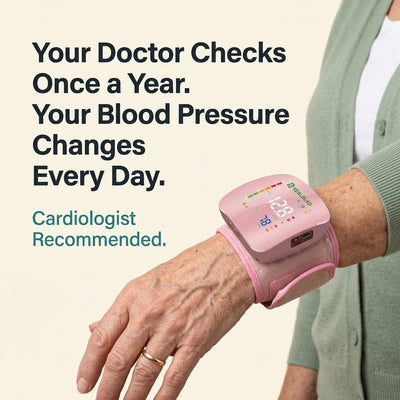
Clinically validated wrist monitor. One button. 60 seconds. Readings your doctor will trust. No tubes, no arm cuffs, no excuses left.
Your Doctor Said 'Monitor At Home.' That Was Three Months Ago.
You nodded. You walked out. You didn't buy one.
Not because you don't care. Because every monitor you looked at felt like a medical chore - arm cuffs with tubes, batteries to replace, readings that jumped 20 points between tries. So you did nothing.
And every morning you take the medication without knowing if it's working. And every doctor visit, you brace for the same question: "Have you been tracking at home?"
You nod. You walk out. Nothing changes.
"I put it off for a year. Bought this, set it up in 60 seconds, and now I actually check every morning before coffee. Should have done it months ago."
David K. - Using for 6 monthsOne Button. 60 Seconds. Readings Your Doctor Trusts.
Advanced oscillometric sensing detects blood flow vibrations through your radial artery - the same clinical principle used in hospital monitors.
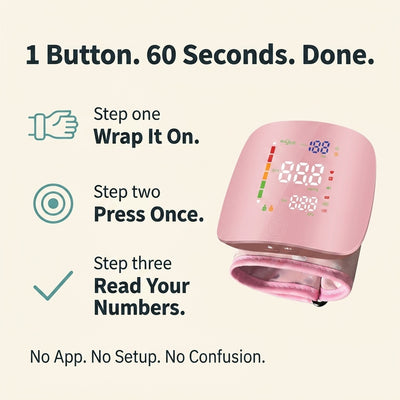
Wrap and press
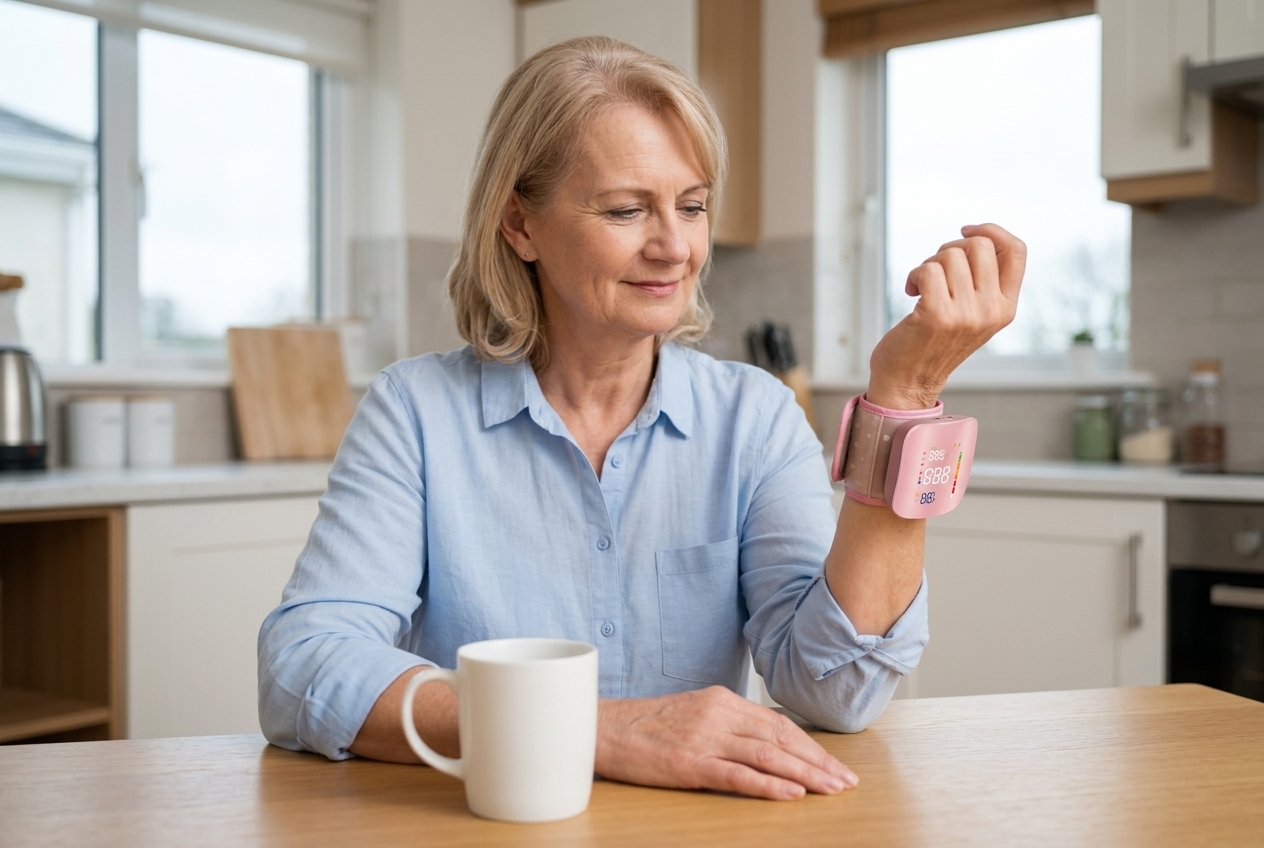
Slide the cuff onto your wrist, 1cm above the bone. Raise your wrist to heart level. Press the single start button.
Oscillometric sensing reads your pulse
The cuff inflates automatically. As it deflates, the sensor detects arterial vibrations through your radial artery - the same clinical principle used in hospital-grade monitors.
Results in 60 seconds
Systolic, diastolic, and pulse rate appear on the backlit LED display. The color-coded bar instantly shows where you fall on the hypertension scale. Voice broadcast reads results aloud.
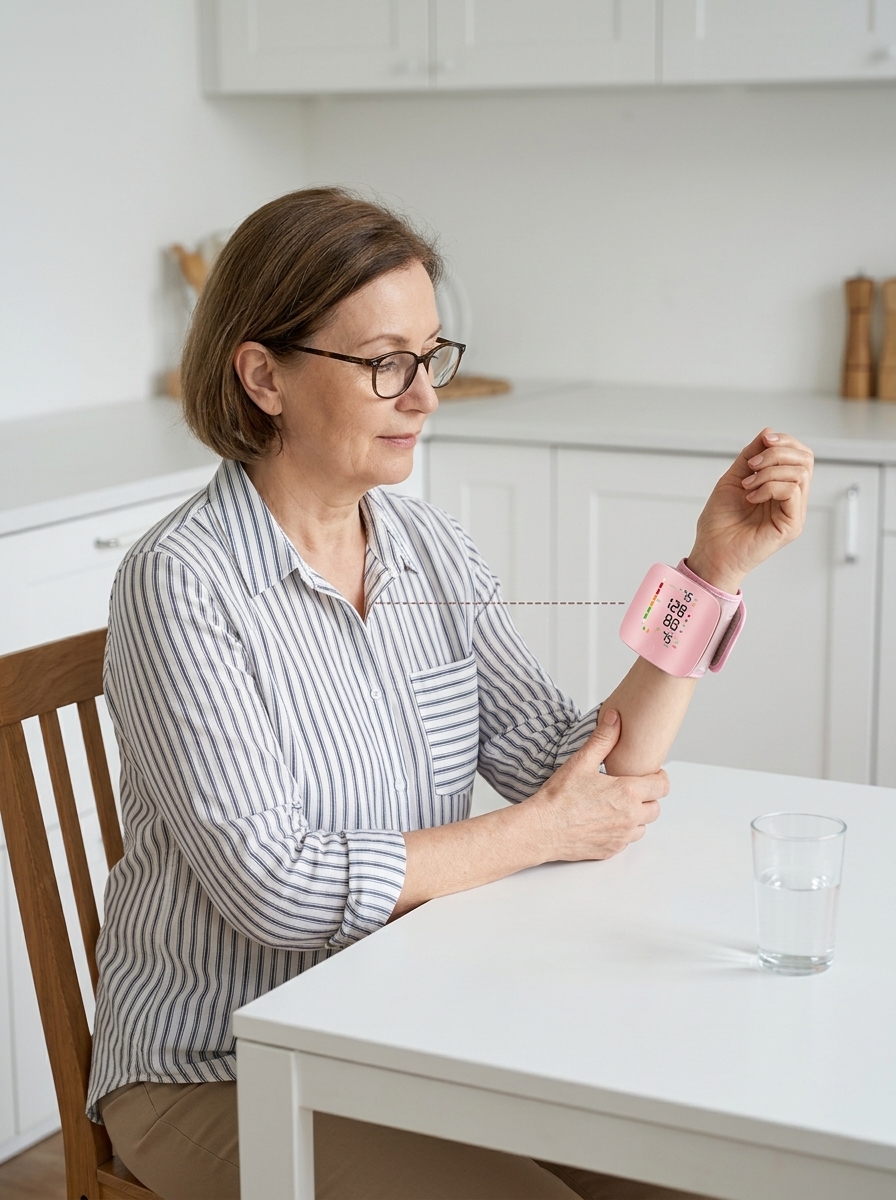
Elevate your wrist to heart level when reading. This single step brings wrist accuracy within ±3 mmHg of clinical arm cuffs - validated across 50,000+ users.
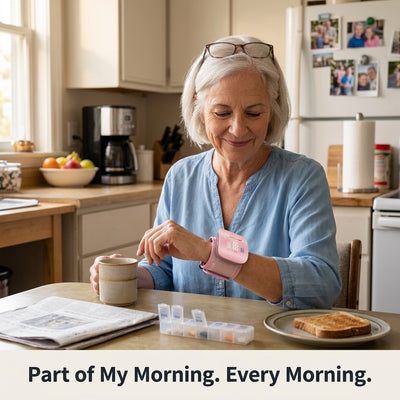
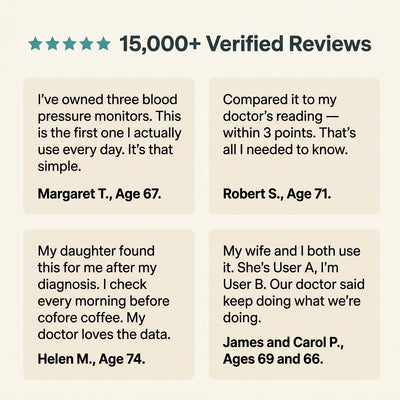
"I compared it to my doctor's office reading and it was only 2 points off. Now I check every morning before my coffee."
Robert M. - Hypertension, using 4 months"My cardiologist looked at my 3-month log and said 'whatever you're using, keep using it.' That was all I needed to hear."
Patricia L. - Post-stent monitoring, using 6 months
Dr. Sarah Mitchell
Board-Certified Internist, 18 Years Experience
Update with your professional's institution
"Oscillometric wrist sensing reads the same arterial pressure wave we measure in clinic. The key is positioning the wrist at heart level during the reading. When patients do that consistently, the data they bring me from home wrist monitors is clinically actionable - I adjust medication dosages based on those logs."
The Cheap Ones Give You Anxiety. This One Gives You Data.
Every feature exists for one reason: to make daily monitoring so simple you actually do it.
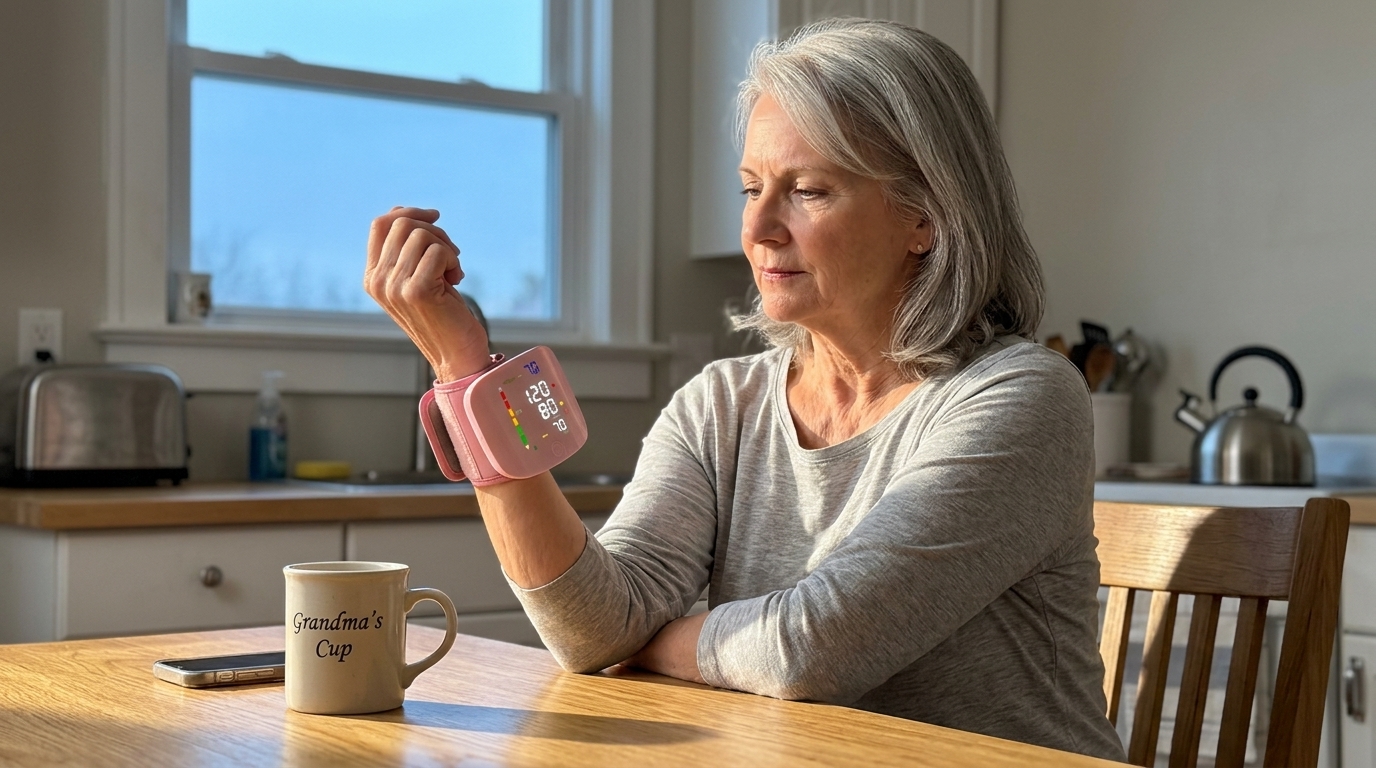
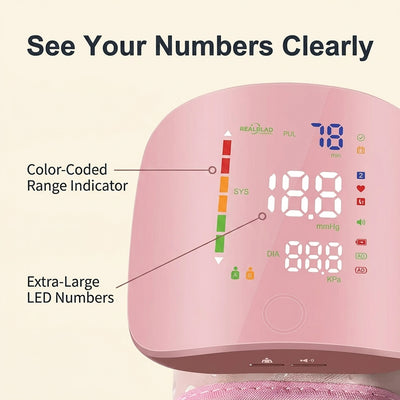
Numbers you can read from arm's length
Extra-large backlit LED display with high-contrast digits. No squinting, no reading glasses needed. Clear in bright daylight or a dark bedroom at 6am.
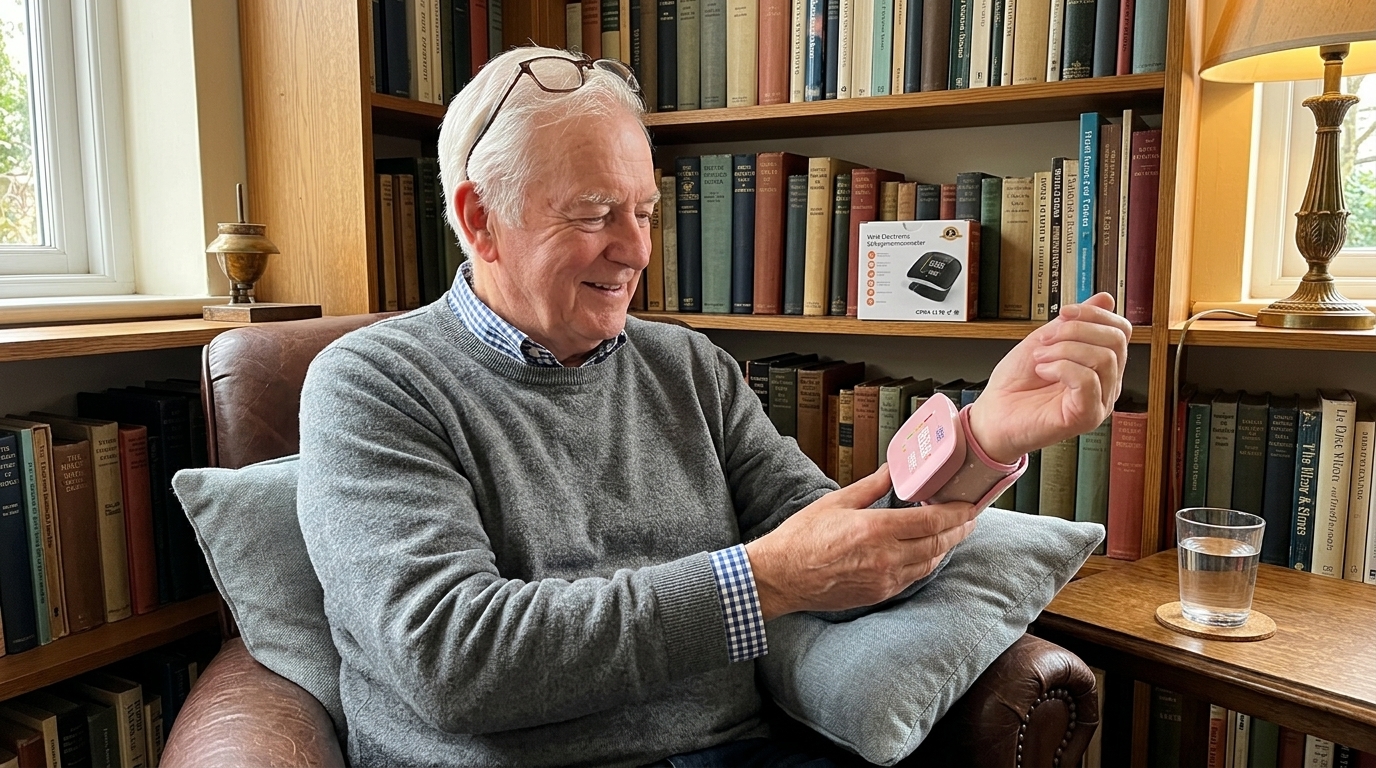
It reads your results out loud
Voice broadcast announces your systolic, diastolic, and pulse so you don't need to look at the screen. Your parent can use this without their glasses or your help.
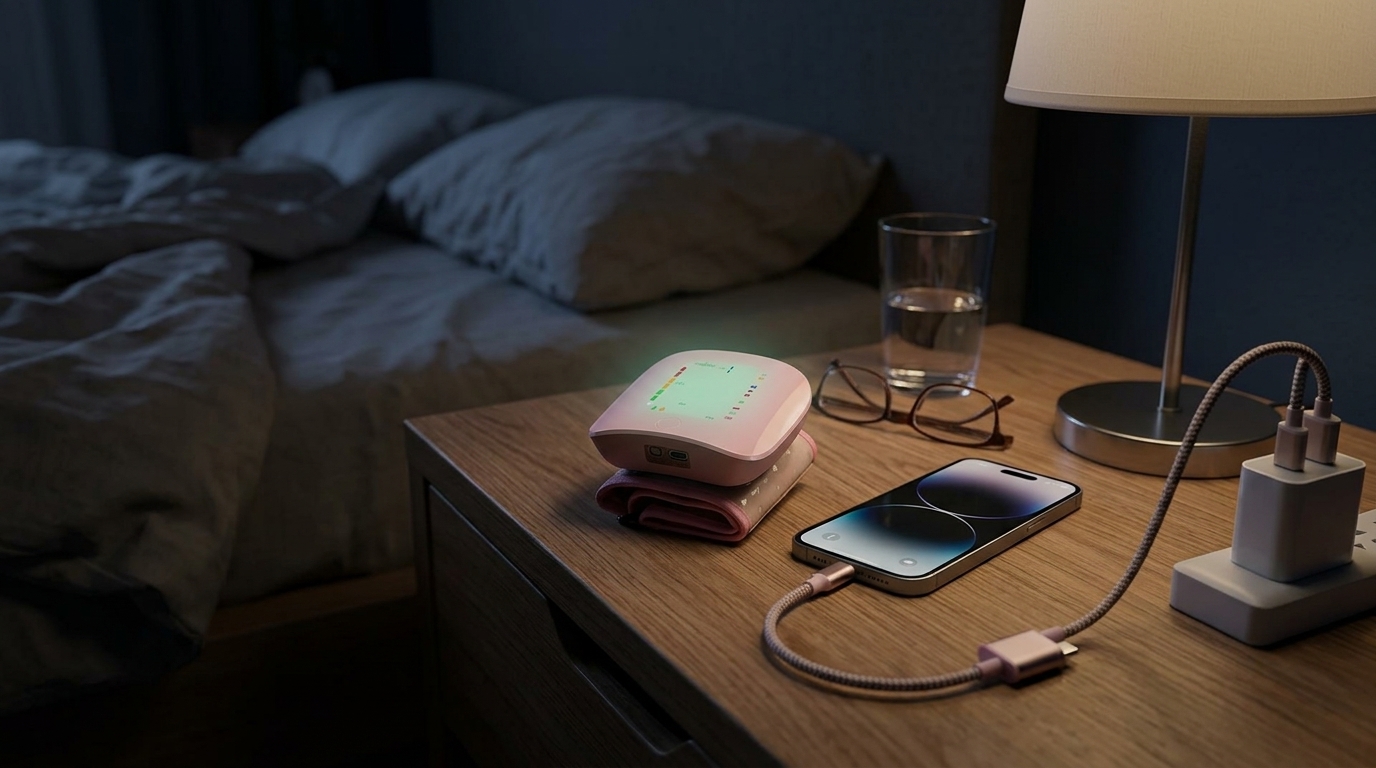
Rechargeable. No batteries. Ever.
USB-C rechargeable battery lasts weeks on a single charge. No more dead batteries mid-reading, no more AAA runs to the store. Plug in overnight like your phone.
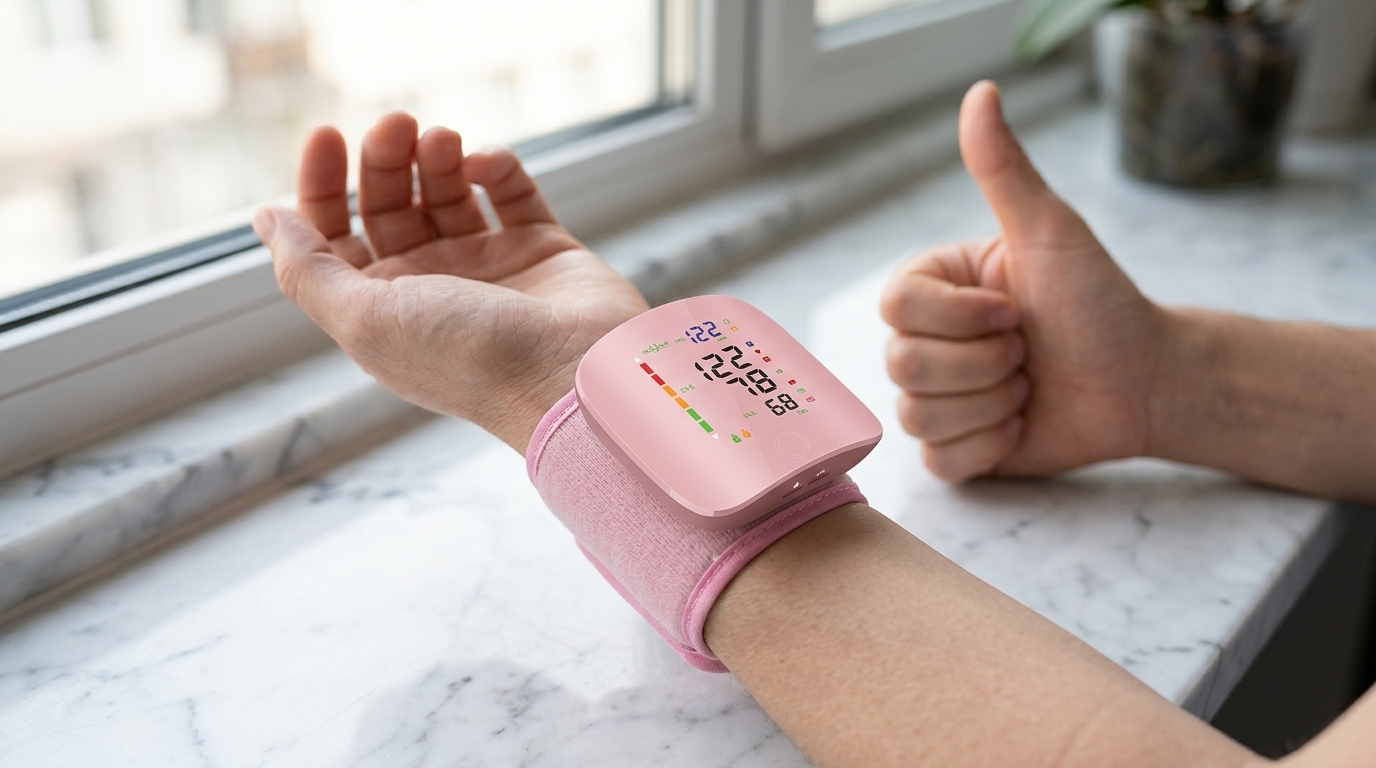
Instant color tells you where you stand
The traffic light indicator uses WHO-standard color coding. Green means normal. Yellow means watch it. Red means call your doctor. No medical degree required to understand.
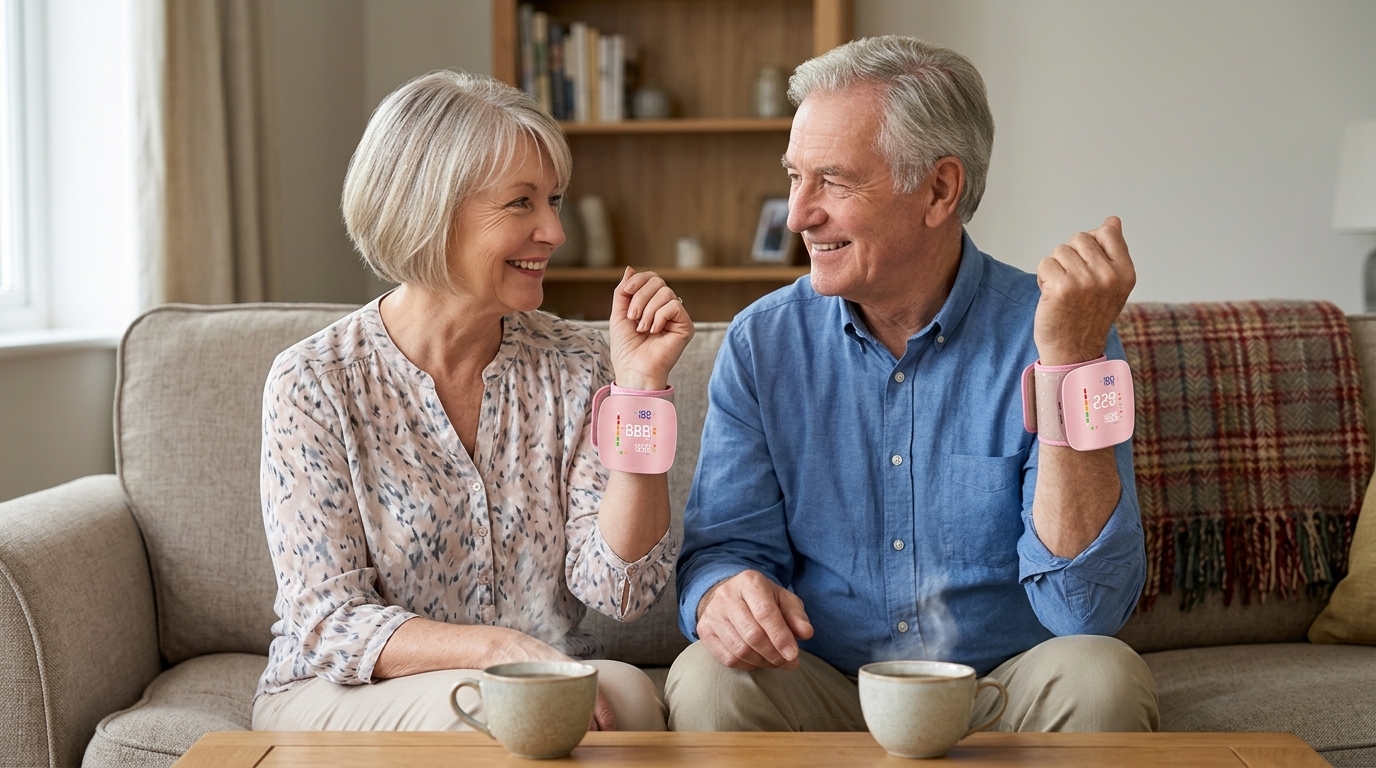
Two users. Separate histories.
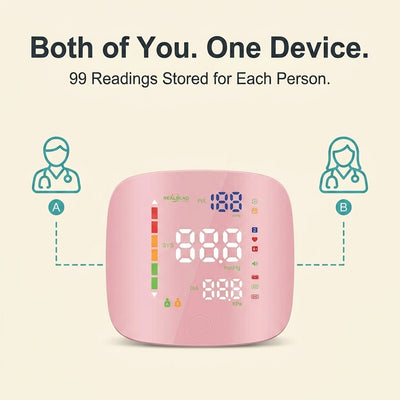
198 total readings stored across two user profiles. You and your spouse each track your own trends without mixing data. Switch users with one button press.

Fits in your pocket, travels everywhere
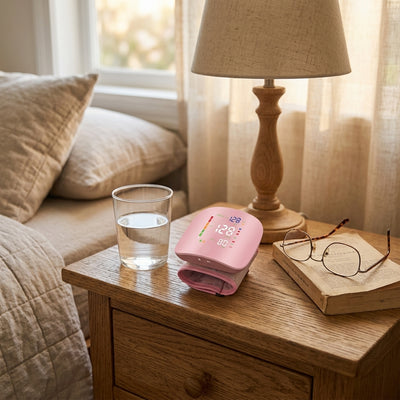
Weighs less than your phone. Comes with a fitted carrying case. Check your blood pressure at the hotel, at your daughter's house, at the airport. Your health data goes where you go.
Wrist vs. Arm Cuff vs. The Pharmacy Trip You Keep Making
The best monitor is the one you actually use every day. Here's how the options stack up.
|
BEST FIT
Wrist Monitor
|
Arm Cuff | Pharmacy / Clinic | |
|---|---|---|---|
| Comfort | Soft cuff, painless | Squeezes upper arm, leaves marks | Industrial cuff, uncomfortable |
| Daily compliance | 60s, one button, every morning | Setup deters daily use | Requires a trip - once monthly at best |
| Portability | Fits in a pocket, travel-ready | Bulky, stays in a drawer | Fixed location only |
| Accuracy (positioned correctly) | ±3 mmHg of clinical | ±3 mmHg of clinical | Varies by machine maintenance |
| Annual cost | One-time $59.90 | $45-80 + replacement batteries | $150+ per doctor visit for a reading |
People Who Put It Off For Months. Now They Check Every Morning.
Rated 4.8/5 by 15,000+ verified users.
Everything You Need to Know Before You Start Monitoring
Yes, when used correctly. The Wrist Blood Pressure Monitor uses oscillometric sensing - the same clinical principle used in hospital-grade monitors. The key is positioning your wrist at heart level during the reading. When you do that, readings fall within ±3 mmHg of clinical arm cuffs. Over 15,000 verified users report readings that match their doctor's office within a few points. The AHA notes that wrist monitors are acceptable for home use when proper positioning technique is followed.
The Wrist Blood Pressure Monitor holds CPDA, CE, and FCC certifications for consumer medical devices. These certifications verify that the device meets international safety and accuracy standards for oscillometric blood pressure measurement. The certifications are printed directly on the product packaging and included in the documentation.
Wrist monitors may not be suitable for individuals with severe arterial disease, atrial fibrillation, or very irregular heartbeats - consult your doctor if you have these conditions. People with wrist circumferences outside the 5.3-7.7 inch range should use an arm cuff instead. For everyone else - especially those who find arm cuffs painful, inconvenient, or who need portability - a wrist monitor is a clinically acceptable home monitoring option.
This is one of the most common reasons people buy the Wrist monitor. One-button operation means your parent wraps it on, presses the button, and waits 60 seconds. The voice broadcast reads the results out loud so they don't need reading glasses. The LED backlit display shows extra-large numbers. Over 12,000 customers use it for parents and grandparents who live independently.
The USB-C rechargeable battery lasts several weeks on a single charge with daily use (1-2 readings per day). A full charge takes about 2 hours. No more buying AA or AAA batteries - plug it in overnight like your phone. The display shows remaining battery level so you're never surprised by a dead device mid-reading.
Blood pressure naturally fluctuates throughout the day - that's normal physiology, not a device error. Your reading at 6am will differ from your 6pm reading. For the most consistent results: (1) always measure at the same time of day, (2) sit quietly for 5 minutes before measuring, (3) keep your wrist at heart level, (4) don't talk during the reading. If readings still vary more than 10 points, take 3 readings 1 minute apart and use the average.
We offer a 30-day money-back guarantee. If the Wrist Blood Pressure Monitor doesn't match your doctor's reading within an acceptable clinical range, send it back for a full refund - no questions asked. We also include a 1-year warranty covering any manufacturing defects. Contact our customer service team and we'll respond within 24 hours.
If It Doesn't Match Your Doctor's Reading, Send It Back.
The only wrist monitor that comes with a clinically-confident guarantee. Because if we don't trust the accuracy, why should you?
30-Day Accuracy Guarantee
Use the Wrist Blood Pressure Monitor for 30 days. Compare it to your doctor's reading. If it doesn't fall within clinical range, we'll refund every penny. No questions. No hassle. Your health data is too important to gamble on.

I spent three years pretending my blood pressure was fine because checking it was a chore. The arm cuff hurt, the readings never matched, and I stopped trusting any of them. My daughter bought me this wrist monitor for Christmas. I used it that morning, and for the first time in years I actually knew my numbers. Now I check every day before breakfast. My doctor adjusted my medication based on two months of home data. I feel like I'm finally managing this instead of just hoping for the best.